

SIMPLIFY. STANDARDIZE. SCALE.

Mid-market EHS software built for companies that are scaling, not standing still.

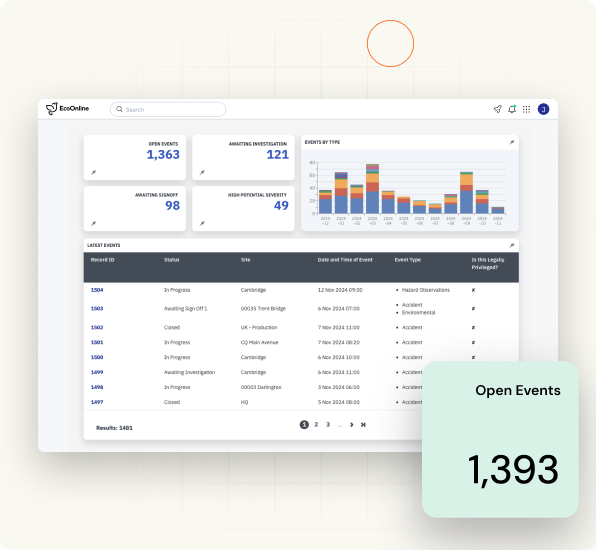
EcoOnline helps growing organizations replace spreadsheets, disconnected systems, and manual reporting with centralised health and safety management software designed to scale across teams, sites, and compliance requirements.

Growth is good. But it introduces complexity that spreadsheets, shared drives, and disconnected tools were never designed to handle.

As headcount increases, new sites open, and compliance requirements multiply, the gaps in manual safety management become harder to ignore. What worked for a single-site team of 50 does not work for a multi-site operation of 500.

Do any of the below look familiar?

  • Different sites use different forms, processes, and filing systems
  • No reliable way to compare safety performance across locations
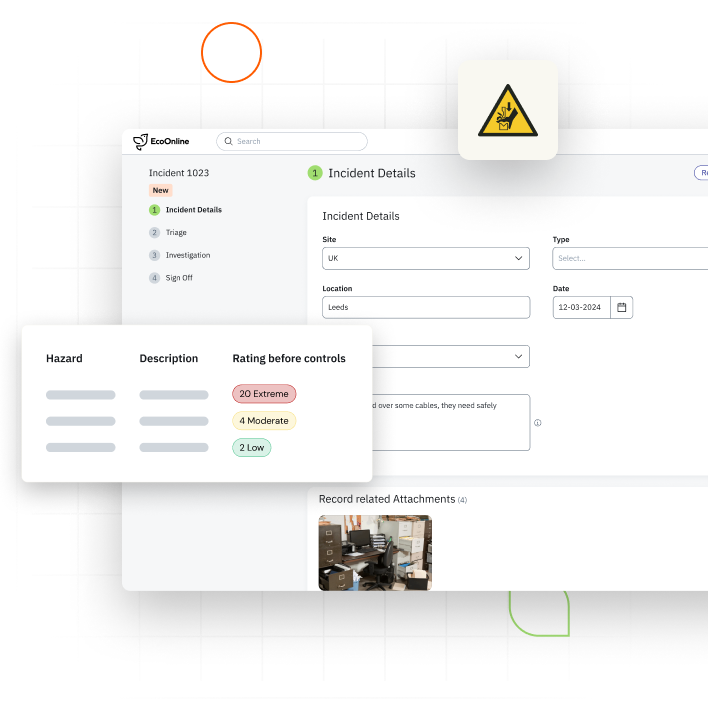
  • Risk assessments are completed on the ground but never properly aggregated at a management level
  • Compliance obligations are tracked in spreadsheets that only one person fully understands
  • The EHS team spends more time on admin than actual risk reduction
  • Senior leaders ask for data that no one can produce quickly or confidently
Want High Adoption Rates Choose Easy To Use Software White Bg
Hadley Group Black And White Logo
Quote Icon

EcoOnline is like a living, breathing system in the background doing work for us. It flags risks we might not have spotted for months.

– MARK PENDREY,
HSE Systems & Compliance Manager

Every industry has a distinct operational risk profile. EcoOnline supports growing organizations across high-risk sectors with workflows, templates, and compliance frameworks built around the challenges that matter most in your environment.

Vector-yellow
What is mid-market EHS software?

Mid-market EHS software is a health and safety management platform designed for organisations that have outgrown manual systems, spreadsheets, and disconnected tools – but do not need the complexity or cost of a full enterprise deployment. Mid-market EHS software gives organizations the centralized visibility, standardized workflows, and scalable compliance management they need to manage safety effectively across multiple sites, teams, and regulatory requirements.

What is EHS software?

EHS software is a digital platform that helps organizations manage their environment, health, and safety obligations. EHS stands for environment, health, and safety, and the software category covers everything from day-to-day safety observations and near miss reporting through to organization-wide compliance management and sustainability reporting. Unlike generic business software adapted for safety use, purpose-built EHS software is designed around the specific workflows, regulatory requirements, and reporting needs of safety and operations teams. EcoOnline is a cloud-based EHS software platform used by over 11,000 organizations globally across high-risk industries such as construction, manufacturing, retail, transport, and utilities.

What is the best EHS software for growing companies?

The best EHS software for growing companies is one that can be implemented quickly, adopted easily by site-level teams, and scaled without requiring a platform change as the organization expands. Growing organizations need centralized visibility across multiple locations, standardized incident and risk workflows, and audit-ready reporting – without the implementation overhead of enterprise-grade systems.

How do I choose EHS software for my organization?

Choosing EHS software starts with understanding the operational problems you need to solve, not the features different vendors offer. For growing organizations, the most important evaluation criteria are: whether the platform consolidates safety management across multiple sites, how quickly it can be implemented and adopted by site-level teams, whether workflows can be standardized centrally and adapted locally, and whether the reporting output meets the standard your leadership and health and safety compliance teams require. Beyond capability, assess the vendor’s implementation support, customer success track record, and whether the platform scales with your growth rather than requiring a migration when your operations expand.

What is scalable safety management software?

Scalable safety management software is a platform that supports an organization’s health and safety management needs as it grows – adding sites, users, and workflows without requiring a system migration, significant reconfiguration, or a new vendor relationship. For mid-market organizations, scalability means the platform that works for three locations today can still work effectively for twenty locations in three years. Scalable safety management software provides long term safety ROI.

How does health and safety management software help growing organizations?

Health and safety management software helps growing organizations by replacing the manual, disconnected, and inconsistent processes that develop naturally as headcount and site count increase. It centralizes incident reporting, risk assessments, audit documentation, and compliance tracking in one system. This provides managers with visibility across the whole operation and gives site teams consistent, practical workflows that reduce rather than adding to their administrative burden. For growing organizations, the biggest gains typically come from time saved in audit preparation, reduced inconsistency between sites, and leadership’s ability to see safety performance data without manual data collection.

When should a growing company invest in EHS software?

A growing company should invest in health and safety management software when manual systems are creating more risk than they are managing. The clearest signals are: inconsistent safety processes between locations, inability to produce consolidated performance data for leadership or auditors, EHS teams spending the majority of their time on administration rather than risk reduction, and compliance obligations that are growing faster than the team’s capacity to track them manually. The earlier a growing organization implements structured EHS software, the less remediation work is required later.

How is mid-market EHS software different from enterprise EHS software?

Mid-market EHS software differs from enterprise EHS software primarily in implementation complexity, cost structure, and deployment approach. Enterprise platforms are built for global, multi-region deployments with complex governance hierarchies, deep system integrations, and lengthy implementation cycles. Mid-market EHS software delivers the core capabilities growing organizations need – centralized visibility, standardised workflows, compliance management, and multi-site reporting – with faster implementation, simpler onboarding, and a cost structure that reflects mid-market rather than enterprise scale. Because EcoOnline bridges both worlds: it is the platform of choice for both mid-market and enterprise organisations – meaning it scales with organisations as they grow rather than requiring a platform change at the next stage.

What industries use mid-market EHS software?

Mid-market EHS software is used across any industry where operational growth creates safety management complexity. The most common sectors include construction, manufacturing, retail, transport, and utilities. What these industries share is a combination of multi-site operations, regulatory compliance obligations, workforce safety risk, and the need to manage safety performance consistently across locations without a large central EHS team. EcoOnline serves mid-market and enterprise organizations across high-risk sectors with industry-relevant workflows, compliance frameworks, and reporting tools built around sector-specific risk profiles.

What is the best affordable EHS software for mid-sized construction companies?

Affordable EHS software for mid-sized construction companies is a platform that delivers the core safety management capabilities construction operations need – permit to work, incident reporting, risk assessment, contractor management, and audit documentation – without the cost structure or implementation complexity of enterprise-grade systems. For mid-sized construction businesses, affordability is not just about licence cost. It includes implementation time, training overhead, ongoing support, and the total resource required to run the platform day to day.