

Health & Safety

Machine guarding safety: Inspection checklist, common gaps, and corrective actions

Use this machine guarding safety checklist to identify protection gaps and track corrective actions across workplaces.
Machine Guarding
Back to all
Article

By Laura Fitzgerald

November 24, 2026

Summary

  • Inspect the whole machine, including drives, loading points, and access from neighbouring work areas.
  • Check cleaning, changeovers, and jam clearance alongside normal production.
  • Give functional tests to competent people following approved procedures.
  • Stop equipment when a guarding failure exposes people to danger.
  • Record the repair, verification, and authorisation before returning equipment to service

Introduction

A missing panel, a loose fixing, or a defeated interlock can leave people exposed to dangerous machinery. An effective machine guarding safety inspection checks whether safeguards protect people during the tasks they actually perform, then gives every defect a clear response.

Use the checklist below to review guards, protective devices, and the arrangements that support them. It separates visual checks from specialist verification and helps you record findings, decide when to stop equipment, and confirm that corrective actions work. Adapt it to each machine, its instructions, and the requirements that apply to your site to keep your people safe.

Table of contents

Click on a specific section below to navigate to that area:


What is machine guarding?

Machine guarding uses physical barriers and protective devices to prevent people from reaching dangerous machine parts or to stop hazardous movement before someone reaches it. A guard inspection checks whether that protection remains effective in the machine’s current condition and layout.

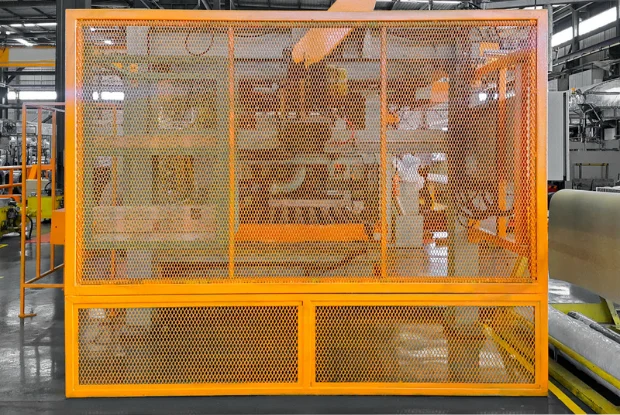
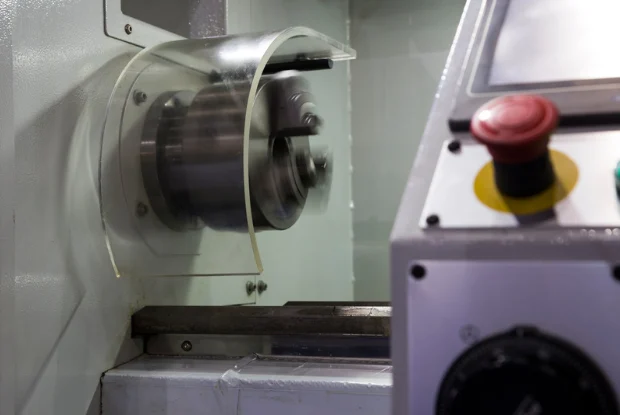
An Example Of a physical machine guard

In Great Britain, the Provision and Use of Work Equipment Regulations 1998, or PUWER, require employers to manage work equipment risks. Northern Ireland has separate PUWER regulations from 1999. Both frameworks cover equipment suitability, maintenance, training, and protective measures. Do not treat Ireland as part of either framework.


What hazards should machine guards protect against?

Look beyond the part that cuts, presses, or shapes the product. The UK Health and Safety Executive’s (HSE) machinery safety guidance identifies risks from moving parts, ejected material, rollers, drives, crushing, and shearing.

Map hazards to each task:

  • Cutting and severing: contact with blades, cutters, or sharp moving components.
  • Drawing-in and entanglement: rollers, shafts, belts, and rotating projections.
  • Crushing and shearing: closing tooling, moving tables, or machinery beside fixed structures.
  • Ejection: fragments, workpieces, or waste leaving the process.

Include maintenance staff, cleaners, contractors, and people passing nearby. A front guard might protect the operator while leaving a rear drive accessible. Guards also need appropriate strength and containment for the hazard; a guarding device that detects a person won’t be able to physically contain flying material.


Types of machine guards and protective devices

Start with the machine’s risk assessment and design. The HSE’s PUWER overview explains the role of fixed guards and interlocked access, including guard locking where necessary. The following comparison helps frame an inspection, rather than specifying a new guarding system.

Safeguard How it protects Inspection focus

Fixed guard

Provides a secured physical barrier.

Fixings, damage, openings, and access around the barrier.

Interlocked guard

Links an access guard to the safety control system.

Approved checks of stopping, start prevention, and resistance to defeat.

Guard locking

Keeps an access guard locked while a hazard remains.

Release timing and protection during machine run-down.

Presence-sensing device

Detects access and initiates a protective response.

Validated coverage, positioning, stopping performance, and restart arrangements.

In Ireland, the Health and Safety Authority’s (HSA) work equipment guidance, explains that protective distances depend on access and stopping characteristics. Ask a machinery safety specialist to verify dimensions and safety functions against applicable requirements, rather than selecting a universal gap size from a generic checklist.


Machine guarding safety inspection checklist

Your system needs to reflect the rules for the location and the role your organisation holds. These frameworks provide a starting point for configuring project workflows.

Prepare the inspection

The first step in the process is to identify the machine, location, inspection date, inspector, and tasks covered. Then, gather the current risk assessment, instructions, guard layout, previous defects, and relevant test records. Ask operators where material jams and which tasks require access. Risk assessment software can help you manage and share those assessments.

Use V for visual or document checks from a safe position and C for competent-person verification under an approved procedure. Never reach into machinery, defeat a safeguard, or create exposure to test it. Arrange safe isolation whenever the inspection requires access to dangerous parts.

For each row, mark P for pass, F for fail, or NA with a reason. Enter an evidence or action reference. An unverified safety-critical function remains unresolved, rather than passing by default.

Check Pass condition and evidence to record P/F/NA Evidence or action

1. Hazard coverage (V)

Required guards cover the point of operation, drives, and accessible nip points. Record guard locations.

___

___

2. Guard condition (V)

Panels, mesh, hinges, and fixings show no damage that compromises protection. Record defects or photographs.

___

___

3. Access routes (C)

Validated openings and distances prevent dangerous reach over, under, around, or through guards. Reference the assessment.

___

___

4. Interlocks (C)

Approved tests confirm the specified stop and start-prevention functions. Retain the test result.

___

___

5. Run-down (C)

Protection prevents access while hazardous movement continues. Reference stopping and guard-locking verification.

___

___

6. Protective devices (C)

Approved tests confirm coverage, positioning, and safety response.

___

___

7. Reset and restart (C)

Approved checks confirm safe reset and restart, including protection for anyone inside an enclosure.

___

___

8. Bypass signs (V)

No visible tampering, spare actuators in switches, or unauthorised alterations. Record concerns for investigation.

___

___

9. Ejection and new hazards (V)

Cleaning, lubrication, and changeover procedures match actual work and specify safe access. Reference instructions.

___

___

10. Task access (V)

Cleaning, lubrication, and changeover procedures match actual work and specify safe access. Reference instructions.

___

___

11. Energy control (C)

Machine-specific isolation covers relevant supplies and stored energy. Reference the approved verification record.

___

___

12. Controls and records (V/C)

Stops remain accessible; competent testing confirms required functions. Previous defects have verified closure evidence.

___

___

These checks translate Ireland’s guarding requirements and HSE’s maintenance guidance into a practical inspection structure. They don’t replace machine-specific engineering assessment or prescribed examinations.

Set the inspection frequency

Use risk, deterioration, operating conditions, and manufacturers’ recommendations to set intervals. HSE’s inspection guidance also identifies installation, relocation, and exceptional events as relevant triggers. Some machines, including certain power presses, have additional specific requirements.

In Ireland, Regulation 30 requires competent-person inspections in specified circumstances and retention of those results for five years. For example, an Irish food producer relocating a packaging line should arrange an inspection before use where safety depends on installation conditions. This illustrative scenario also calls for reviewing the changed access routes.


Common guarding gaps and corrective actions

Treat each finding as a control problem with an owner, deadline, and verification step. The actions below illustrate possible responses. A competent person should select and validate the solution for the machine.

Gap Suggested corrective action Evidence before closure

Guard missing after maintenance

Keep equipment out of use; restore the specified guard and improve maintenance handover.

Keep equipment out of use; restore the specified guard and improve maintenance handover.

Interlock repeatedly bypassed

Stop affected equipment; restore and validate the safety function, then investigate access pressures.

Successful approved tests and a revised task method.

Opening enlarged for material

Review the feed arrangement and redesign protection through competent engineering assessment.

Validated dimensions and updated drawings.

Hazard continues after access opens

Review stopping performance and whether guard locking or another engineered measure is necessary.

Documented validation against the assessed hazard.

Guard obstructs cleaning

Redesign safe access and the cleaning procedure; assess isolation needs.

Operators and cleaners can follow the verified method.

Same defect returns

Investigate vibration, wear, unsuitable components, and maintenance arrangements.

Follow-up inspection confirms the correction lasts.

Consider the following UK example: A Midlands metalworking site finds that repeated stock misfeeds encourage workers to bypass an access interlock. Restoring the switch addresses the immediate defect. Reviewing stock guidance, access design, and production expectations helps the team address why it happened. Keep the machine out of use until competent verification confirms safe operation.

When equipment should be taken out of service

Stop using equipment when missing, damaged, or defeated protection exposes someone to a dangerous part, or when a required safety function fails. If you can’t establish that a safety-critical safeguard works, keep the equipment out of use pending competent assessment.

Follow the safe shutdown and isolation procedure. HSE’s maintenance guidance addresses locking off, stored pressure, and parts that could fall. A stop button alone doesn’t establish safe isolation.

Next, identify the equipment’s status and inform affected teams across shifts. Before restart, require the responsible people to confirm the repair, reinstated safeguards, necessary tests, and safe work area. Finally, record authorisation and communicate any changed instructions.

Calculate your safety ROI and build a business case decision-makers can’t ignore

Get the ROI of safety software in minutes with our free safety ROI calculator.


Machine guarding responsibilities

Employers must provide the resources and arrangements for safe equipment. Give named people practical responsibilities within that duty:

  • Operations leaders: enforce stop-use decisions, resource repairs, and authorise return through the agreed process.
  • Engineering and maintenance: assess technical defects, control modifications, and verify repairs within their competence.
  • Safety teams: coordinate inspections, review recurring findings, and check action effectiveness.
  • Operators and cleaners: complete their assigned checks, report defects, and follow safe access procedures.

Include contractors and agency workers in briefings. Make reporting straightforward, and explain who responds when someone raises a guarding concern.

Turn machine guarding checks into action

Make inspection findings the starting point for clear, accountable follow-up. A structured approach to machine guarding inspections helps your team document concerns, identify the actions needed, and maintain visibility over outstanding issues.

EcoOnline’s audits and inspections software supports this process with configurable checklists, recurring inspection scheduling, and corrective action tracking. Teams can capture findings in the field, assign follow-up actions, and monitor them through to completion, with records stored centrally for greater visibility across sites.

Discover how EcoOnline can help you manage your audits and inspections more consistently.

Calendar Icon

Frequently asked questions

How can we manage checks across several sites?

Use common reporting fields while keeping machine-specific checks and local legal requirements. Track repeat defects and overdue actions by machine and site.

EcoOnline’s EHS software brings risk assessments, inspections, incident reporting and corrective actions into one connected platform. Need a little more convincing? Check out our demo video library and ROI calculator. You can also explore our Safety Drift digital hub.

How often should we inspect machine guards?

Set intervals for each machine using risk, conditions, deterioration, and manufacturer guidance. Combine appropriate pre-use checks with more detailed inspections and tests. The HSE doesn’t prescribe one annual interval for every machine; check additional machine-specific duties.

Who can carry out a guarding inspection?

Match competence to the task. A trained operator may complete defined visual checks, while safety control testing or design validation needs specialist knowledge. HSENI explains that an employee can undertake an inspection if they have the necessary competence.

Can we use an emergency stop instead of a guard?

An emergency stop doesn’t prevent access to dangerous parts. Select protection that controls the exposure, and provide emergency stopping arrangements where appropriate. PUWER guidance treats guarding, stopping controls, and isolation as separate protective measures.

Is an interlocked guard enough for maintenance?

Don’t assume it is. Maintenance can expose people to unexpected movement and stored energy. Use the machine-specific safe system of work and isolation arrangements. HSE’s maintenance guidance explains the precautions for those risks.

How long should we keep inspection records in Ireland?

Regulation 30 requires employers to keep the results of inspections under paragraphs (a) and (b) available for five years. Make those records accessible as required and connect findings to corrective actions and subsequent verification.

Does older machinery need effective guarding?

Yes. Age doesn’t remove the duty to manage equipment risks. HSE states that PUWER aims to make work equipment safe regardless of age, condition, or origin. Assess the actual hazards and the protection the current tasks require.

What makes a useful guarding inspection record?

Record the machine, task, finding, evidence, immediate response, action owner, due date, and verification. Include the test procedure reference where relevant. Our guide to health and safety inspections explains how findings fit the wider inspection process.

What is the difference between machine guarding and lockout/tagout?

Machine guarding protects workers from moving parts while a machine is running. Lockout/tagout (LOTO) protects workers while a machine is shut down for servicing or maintenance, by cutting off and locking its energy sources so it can’t start up unexpectedly. Guarding is the control for normal operation. LOTO takes over when a guard has to be removed or bypassed, or when someone has to reach into a danger zone.

About the author

Laura Fitzgerald

Content Marketing Manager

Laura Fitzgerald is a Content Marketing Manager with EcoOnline. She has been writing about health and safety topics since 2017, with a focus on the areas of improving employee safety engagement and EHS legislation.