

Health and Safety

Machine guarding safety: Inspection checklist, common gaps, and corrective actions

Use this machine guarding safety checklist to identify protection gaps and track corrective actions across US and Canadian workplaces.
Machine Guarding
Back to all
Article

By Laura Fitzgerald

November 23, 2026

Summary

  • Inspect the whole machine, including drives, loading points, and access from neighboring work areas.
  • Check cleaning, changeovers, and jam clearance alongside normal production.
  • Give functional tests to competent people following approved procedures.
  • Stop equipment when a guarding failure exposes people to danger.
  • Record the repair, verification, and authorization before returning equipment to service

Introduction

A missing panel, a loose fixing, or a defeated interlock can leave people exposed to dangerous machinery. An effective machine guarding safety inspection checks whether safeguards protect people during the tasks they actually perform, then gives every defect a clear response.

Use the checklist below to review guards, protective devices, and the arrangements that support them. It separates visual checks from specialist verification and helps you record findings, decide when to stop equipment, and confirm that corrective actions work. Adapt it to each machine, its instructions, and the requirements that apply to your site to keep your people safe.

Table of contents

Click on a specific section below to navigate to that area:


What is machine guarding?

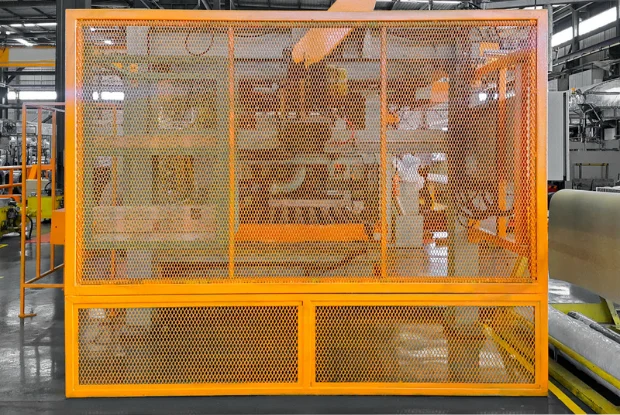
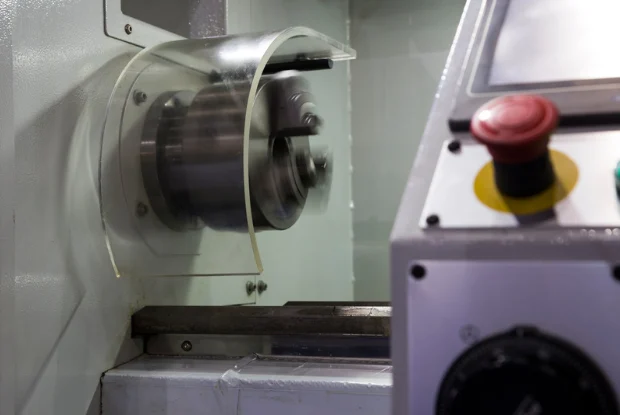
Machine guarding uses physical barriers and protective devices to prevent people from reaching dangerous machine parts or to stop hazardous movement before someone reaches it. A guard inspection checks whether that protection remains effective in the machine’s current condition and layout.

An Example Of a physical machine guard

For US general industry, start with the applicable OSHA machinery standards and check State Plan requirements.

In Canada, identify the federal, provincial, or territorial requirements that cover your workplace. For example, British Columbia’s machinery regulation requires adequate safeguards for hazardous power transmission parts, points of operation, and dangerous ejected material. This provincial rule isn’t a Canada-wide requirement.


What hazards should machine guards protect against?

Inspect where the machine performs work and where it transmits power. A saw blade may have protection, while a nearby shaft or conveyor return roller remains accessible.

Map hazards to each task:

  • Cutting and severing: contact with blades, cutters, or sharp moving components.
  • Drawing-in and entanglement: rollers, shafts, belts, and rotating projections.
  • Crushing and shearing: closing tooling, moving tables, or machinery beside fixed structures.
  • Ejection: fragments, workpieces, or waste leaving the process.

Include cleaners, contractors, maintenance teams, and people passing nearby in your assessment. The Canadian Centre for Occupational Health and Safety (CCOHS), recommends assessing the machine, its tasks, users, and associated hazards. Also assess energy, noise, and other risks that guarding alone won’t resolve.


Types of machine guards and protective devices

The CCOHS safeguarding guide distinguishes physical guards from protective devices. Use the comparison below to frame the inspection. Engineering assessment must determine which combination suits the machine and task.

Safeguard How it protects Inspection focus

Fixed guard

Provides a secured physical barrier.

Fixings, damage, openings, and access around the barrier.

Interlocked guard

Links an access guard to the safety control system.

Approved checks of stopping, start prevention, and resistance to defeat.

Guard locking

Keeps an access guard locked while a hazard remains.

Release timing and protection during machine run-down.

Presence-sensing device

Detects access and initiates a protective response.

Validated coverage, positioning, stopping performance, and restart arrangements.

A light curtain won’t physically contain flying material. Check that the complete safeguarding arrangement addresses every relevant hazard. Have a machinery safety specialist verify openings, distances, and stopping performance against applicable requirements; don’t apply one generic clearance to every machine.


Machine guarding safety inspection checklist

Your system needs to reflect the rules for the location and the role your organization holds. These frameworks provide a starting point for configuring project workflows.

Prepare the inspection

The first step in the process is to identify the machine, location, inspection date, inspector, and tasks covered. Then, gather the current risk assessment, instructions, guard layout, previous defects, and relevant test records. Ask operators where material jams and which tasks require access. Hazard assessment software can help you manage and share those assessments.

Use V for visual or document checks from a safe position and C for competent-person verification under an approved procedure. Never reach into machinery, defeat a safeguard, or create exposure to test it. Arrange safe isolation whenever the inspection requires access to dangerous parts.

For each row, mark P for pass, F for fail, or NA with a reason. Enter an evidence or action reference. An unverified safety-critical function remains unresolved, rather than passing by default.

Check Pass condition and evidence to record P/F/NA Evidence or action

1. Hazard coverage (V)

Required guards cover the point of operation, drives, and accessible nip points. Record guard locations.

___

___

2. Guard condition (V)

Panels, mesh, hinges, and fixings show no damage that compromises protection. Record defects or photographs.

___

___

3. Access routes (C)

Validated openings and distances prevent dangerous reach over, under, around, or through guards. Reference the assessment.

___

___

4. Interlocks (C)

Approved tests confirm the specified stop and start-prevention functions. Retain the test result.

___

___

5. Run-down (C)

Protection prevents access while hazardous movement continues. Reference stopping and guard-locking verification.

___

___

6. Protective devices (C)

Approved tests confirm coverage, positioning, and safety response.

___

___

7. Reset and restart (C)

Approved checks confirm safe reset and restart, including protection for anyone inside an enclosure.

___

___

8. Bypass signs (V)

No visible tampering, spare actuators in switches, or unauthorized alterations. Record concerns for investigation.

___

___

9. Ejection and new hazards (V)

Cleaning, lubrication, and changeover procedures match actual work and specify safe access. Reference instructions.

___

___

10. Task access (V)

Cleaning, lubrication, and changeover procedures match actual work and specify safe access. Reference instructions.

___

___

11. Energy control (C)

Machine-specific isolation covers relevant supplies and stored energy. Reference the approved verification record.

___

___

12. Controls and records (V/C)

Stops remain accessible; competent testing confirms required functions. Previous defects have verified closure evidence.

___

___

Use this as a practical starting point alongside OSHA’s guarding guidance and the machine’s assessment. Add equipment-specific checks and required tests. Completing a generic form doesn’t establish compliance or validate a safety control system.

Set the inspection frequency

Set a documented schedule around the machine’s risks, instructions, deterioration, and applicable rules. Include appropriate pre-use observations and planned technical checks. Review the schedule after modifications, incidents, or evidence that protection is weakening.

Don’t confuse a guard inspection with the periodic inspection of an energy control procedure. OSHA 1910.147 requires that procedure inspection at least annually within its scope. It doesn’t create a universal annual guarding inspection interval.


Common guarding gaps and corrective actions

Treat each finding as a control problem with an owner, deadline, and verification step. The actions below illustrate possible responses. A competent person should select and validate the solution for the machine.

Gap Suggested corrective action Evidence before closure

Guard missing after maintenance

Keep equipment out of use; restore the specified guard and improve maintenance handover.

Keep equipment out of use; restore the specified guard and improve maintenance handover.

Interlock repeatedly bypassed

Stop affected equipment; restore and validate the safety function, then investigate access pressures.

Successful approved tests and a revised task method.

Opening enlarged for material

Review the feed arrangement and redesign protection through competent engineering assessment.

Validated dimensions and updated drawings.

Hazard continues after access opens

Review stopping performance and whether guard locking or another engineered measure is necessary.

Documented validation against the assessed hazard.

Guard obstructs cleaning

Redesign safe access and the cleaning procedure; assess isolation needs.

Operators and cleaners can follow the verified method.

Same defect returns

Investigate vibration, wear, unsuitable components, and maintenance arrangements.

Follow-up inspection confirms the correction lasts.

Consider the following US example: An Ohio fabrication shop finds a missing drive guard after a repair. The supervisor stops the affected machine and arranges safe energy control. Maintenance restores the specified protection, and a competent person verifies it before release. The team adds guard reinstatement to the maintenance handover.

Another illustrative Canadian example: A British Columbia packaging plant finds that a relocated work platform gives access over a conveyor guard. The team removes the unsafe equipment from service, reviews the layout, and verifies revised protection before restart. BC’s regulation specifically addresses safeguarding and identifying unsafe equipment to prevent premature reuse.

When equipment should be taken out of service

Stop using equipment when missing, damaged, or defeated protection exposes someone to a dangerous part, or when a required safety function fails. If you can’t establish that a safety-critical safeguard works, keep the equipment out of use pending competent assessment.

Use the approved shutdown and energy control procedure. In US general industry, OSHA 1910.147 covers specified servicing and maintenance hazards, including unexpected startup and stored energy. A push button isn’t an energy-isolating device. Don’t assume that quick jam clearing automatically qualifies for an exception.

In Canada, use the applicable jurisdiction’s requirements and machine-specific procedure. CCOHS lockout guidance describes isolation, stored energy control, verification, and communication before return to service.

Next, identify the equipment’s status and inform affected teams across shifts. Before restart, require the responsible people to confirm the repair, reinstated safeguards, necessary tests, and safe work area. Finally, record authorization and communicate any changed instructions.

Calculate your safety ROI and build a business case the decision-makers can’t ignore

Get the ROI of safety software in minutes with our free safety ROI calculator.


Machine guarding responsibilities

Employers must provide the resources and arrangements for safe equipment. Give named people practical responsibilities within that duty:

  • Operations leaders: enforce stop-use decisions, resource repairs, and authorize return through the agreed process.
  • Engineering and maintenance: assess technical defects, control modifications, and verify repairs within their competence.
  • Safety teams: coordinate inspections, review recurring findings, and check action effectiveness.
  • Operators and cleaners: complete their assigned checks, report defects, and follow safe access procedures.

Include contractors and temporary workers in briefings. For energy control specifically, CCOHS describes management, supervisor, and authorized-person responsibilities. Confirm your legal duties locally, and make escalation clear when production pressure conflicts with safe operation.

Turn machine guarding checks into action

Make inspection findings the starting point for clear, accountable follow-up. A structured approach to machine guarding inspections helps your team document concerns, identify the actions needed, and maintain visibility over outstanding issues.

EcoOnline’s audits and inspections software supports this process with configurable checklists, recurring inspection scheduling, and corrective action tracking. Teams can capture findings in the field, assign follow-up actions, and monitor them through to completion, with records stored centrally for greater visibility across sites.

Discover how EcoOnline can help you manage your audits and inspections more consistently.

Calendar Icon

Frequently asked questions

How can we manage checks across several sites?

Use common reporting fields while keeping machine-specific checks and local legal requirements. Track repeat defects and overdue actions by machine and site. Our inspection management software guide explains how centralized inspection information can support that workflow.

EcoOnline’s EHS software brings risk assessments, inspections, incident reporting and corrective actions into one connected platform. Need a little more convincing? Check out our demo video library and ROI calculator. You can also explore our Safety Drift digital hub.

Does OSHA 1910.212 cover every machine requirement?

It sets general guarding requirements for US general industry. Other standards address particular machines and power-transmission components. Check the applicable machine-specific provisions and State Plan requirements, rather than treating 1910.212 as a complete design specification.

Are Canadian guarding requirements the same as OSHA rules?

No. Identify the Canadian jurisdiction that covers the workplace. British Columbia’s regulation, for example, sets its own safeguarding requirements. CCOHS offers practical guidance, but that guidance doesn’t replace the applicable legislation or regulator’s requirements.

How often should we inspect guards?

Set intervals around risk, deterioration, manufacturer instructions, and applicable machine-specific rules. Include checks after changes that could affect protection. Keep guarding inspections distinct from the annual energy control procedure inspection that OSHA 1910.147 requires within its scope.

Can an emergency stop replace a guard?

An emergency stop doesn’t prevent access to a dangerous part. Select effective safeguarding for the exposure. OSHA’s guarding guidance describes barriers and protective devices that protect operators and others around the machine.

Can workers use a push stick instead of required guarding?

No. OSHA’s general machine rule says special hand tools for placing or removing material supplement the guarding required by that section. Select suitable handling aids alongside the safeguards the machine and task need.

Who should test interlocks and protective devices?

Assign tests to people with the relevant knowledge, training, and authorization. They should follow approved procedures and record results. The CCOHS machinery assessment guide recognizes that some assessments need specialized technical expertise.

Is a photograph enough to close a guarding defect?

A photograph can show a reinstated panel, but it won’t establish that an interlock or stopping function works. Record the relevant inspection or test result and return-to-service authorization. Match closure evidence to the failure and its risk.

What is the difference between machine guarding and lockout/tagout?

Machine guarding protects workers from moving parts while a machine is running. Lockout/tagout (LOTO) protects workers while a machine is shut down for servicing or maintenance, by cutting off and locking its energy sources so it can’t start up unexpectedly. Guarding is the control for normal operation. LOTO takes over when a guard has to be removed or bypassed, or when someone has to reach into a danger zone.

About the author

Laura Fitzgerald

Content Marketing Manager

Laura Fitzgerald is a Content Marketing Manager with EcoOnline. She has been writing about health and safety topics since 2017, with a focus on the areas of improving employee safety engagement and EHS legislation.