

Chemical Safety

What is GHS? Learn about The Globally Harmonized System

The Globally Harmonized System (GHS) of Classification and Labelling of Chemicals is a voluntary international system that was designed to help countries communicate hazards when using chemicals. It's important for companies to understand exactly what it is, and to outline any critical steps involved to mitigate the risks associated with handling chemicals in the workplace. In this blog post, we will provide you with a brief overview of what the GHS is, the benefits of this system, and why you should implement it in your business.
top-dangerous-800×585-3
Back to all
Article
November 19, 2026

Summary

  • GHS is an international chemical hazard framework. The Globally Harmonized System provides common criteria for classifying chemical hazards and communicating them through labels and safety data sheets.
  • GHS groups hazards into physical, health, and environmental classes. Hazard categories can then indicate the severity of a particular hazard.
  • Labels provide immediate warnings. GHS-based labels can include pictograms, signal words, hazard statements, and precautionary statements to help people understand risks and protective measures.
  • Safety data sheets provide more detailed information. Their standard 16-section structure covers subjects such as hazards, handling, storage, exposure controls, and emergency measures.
  • Local legislation determines your legal duties. GHS is implemented differently through frameworks including EU and GB CLP, OSHA HazCom in the United States, and WHMIS in Canada.

The Globally Harmonized System of Classification and Labelling of Chemicals (GHS) is a United Nations framework for identifying chemical hazards and communicating them through labels and safety data sheets. It gives countries a common and standardized approach to chemical safety, while local laws determine the requirements your business must follow.

For your team, that information is critical to supporting everyday decisions about handling chemicals safely. Understanding GHS helps you interpret product warnings, find the right safety information, and check your responsibilities across different markets.

Table of contents


How does GHS work?

UNECE explains that GHS provides classification criteria and common ways to communicate hazards. Three connected components help people understand a chemical and the precautions they need:

  • Classifying chemical hazards
  • Communicating hazards through labels
  • Providing information through standardized safety data sheets

Classifying chemical hazards

Classification identifies the hazards a substance or mixture presents. GHS groups these broadly into physical hazards, health hazards, and environmental hazards. Examples include flammability, skin corrosion, and toxicity to aquatic life.

A hazard class describes the type of hazard, while a category usually distinguishes severity within that class. Manufacturers and importers assess the available information against the criteria their market requires.

It’s important to note a mixture’s composition can affect its classification, so don’t assume that products with similar uses present identical hazards.

Communicating hazards through labels

A chemical label gives people an immediate warning. Its main elements explain what the product is, which hazards it presents, and what precautions to take.

Label element What it communicates

Product identifier

The identity of the chemical or product.

Supplier information

Who supplies the product and how to contact them.

Hazard pictograms

Visual warnings about applicable hazards.

Signal word

Relative hazard severity through Danger or Warning.

Hazard statements

The nature of the hazard.

Precautionary statements

Recommended measures to prevent or reduce harm.

The classification and local rules determine the elements a label needs. Not every hazard category requires a pictogram or signal word, and workplace container rules can differ from supplier label requirements.

Providing information through standardized safety data sheets

A safety data sheet (SDS) provides more detail than a label. Its 16-section structure covers identification, hazards, safe handling, storage, exposure controls, and emergency measures, among other information.

Use the product identifier to match the label with the correct SDS. Then check the information relevant to the work. Your team should know where to find the SDS and how to use it before handling the product.

For practical advice on keeping documents current and accessible, explore our SDS management guide.

Get your FREE Chemical Inventory Template

Download our Health and Safety Compliance Toolkit to access your chemical inventory template, chemical substitution checklist, plus many more resources.


What is the latest GHS revision

The latest edition is GHS Revision 11, which the UN published in 2025. The UNECE publication includes:

  • Clearer classification criteria for aerosols and chemicals under pressure.
  • Guidance on non-animal methods for classifying skin sensitization.
  • Classification provisions for substances and mixtures that contribute to global warming.
  • Further improvements to precautionary statements.
  • Guidance on identifying simple asphyxiants, which can displace oxygen.

You’ll also see the GHS publication called the Purple Book. It contains the framework’s classification criteria and hazard communication guidance.

The latest UN revision doesn’t automatically change your legal duties, but you should check which provisions your market has adopted, when they apply, and whether they affect your products.


Is GHS a legal requirement

The GHS itself isn’t a standalone global law. Governments use the framework to introduce binding requirements. Your responsibilities depend on the market, product, and your role in the supply chain.

The UN’s GHS companion guide explains how the framework supports chemical management and implementation. Use it to understand GHS, then consult the relevant authority for your local duties.

Market Relevant authority/legislation

Great Britain

GB CLP for classification, labeling, and packaging, with UK REACH for SDS requirements

Northern Ireland

EU CLP and REACH.

EU including Ireland

EU CLP, with REACH governing SDS requirements.

United States

OSHA’s Hazard Communication Standard, or HazCom.

Canada

WHMIS, including federal supplier rules and workplace legislation.

Great Britain and Northern Ireland

The UK’s Health and Safety Executive (HSE) distinguishes GB CLP from EU CLP. England, Scotland, and Wales follow the assimilated CLP Regulation as amended for Great Britain. Northern Ireland follows EU CLP under the Windsor Framework.

If you supply both markets, check each destination’s rules. Don’t assume that an EU amendment automatically applies in Great Britain.

The EU and Ireland

The EU uses CLP Regulation (EC) No 1272/2008, as amended, for classification, labeling, and packaging. REACH Regulation (EC) No 1907/2006 addresses SDS duties through Article 31 and Annex II. Ireland’s Chemicals Acts 2008 and 2010 support enforcement of relevant EU chemical regulations.

The European Chemicals Agency’s (ECHA) guidance on new hazard classes explains changes under Regulation (EU) 2023/707. They address endocrine disruption and certain persistent, bioaccumulative, or mobile substances.

Requirements apply to substances first placed on the market from May 1, 2025 and mixtures from May 1, 2026. Transitional deadlines for qualifying products already in the supply chain are November 1, 2026 for substances and May 1, 2028 for mixtures.

Separately, Regulation (EU) 2025/2439 postponed many provisions of the wider 2024 CLP revision to January 1, 2028. The Council’s explanation concerns specific provisions, rather than all CLP changes.

The United States

The Occupational Safety and Health Administration’s (OSHA) 2024 HazCom update, aligns primarily with GHS Revision 7. OSHA extended compliance dates in January 2026.

Under the current standard, manufacturers, importers, and distributors evaluating substances had a deadline. Their deadline for mixtures is November 19, 2027.

Employers must make necessary updates to workplace labels, hazard communication programs, and training by November 20, 2026 for substances and May 19, 2028 for mixtures. You must check which duties apply to your workplace.

Canada

Canada uses the Workplace Hazardous Materials Information System (WHMIS). The Hazardous Products Act and Hazardous Products Regulations govern supplier requirements.

Federal, provincial, and territorial occupational health and safety laws govern workplace duties.

Health Canada explains that the amended regulations align with Revision 7 and selected Revision 8 provisions. The transition ended on December 14, 2025. Health Canada’s separate compliance-promotion approach doesn’t extend that legal transition.

Suppliers must also meet Canadian language requirements. The Canadian Centre for Occupational Health and Safety (CCOHS) explains that SDS information must appear in both English and French.


What do GHS pictograms tell you

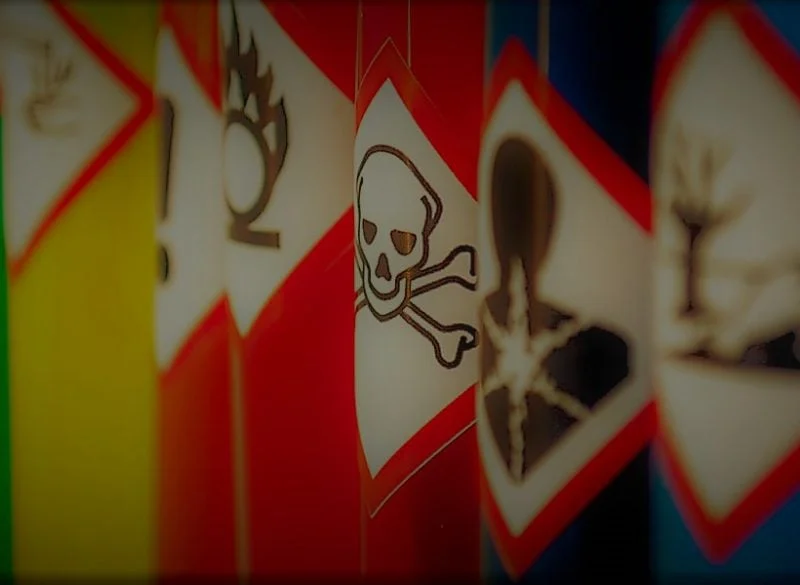
GHS has nine pictograms that communicate physical, health, and environmental hazards. The flame symbol, for example, identifies certain fire hazards. The corrosion symbol can identify skin burns, serious eye damage, or corrosion of metals.

Local systems don’t necessarily require every symbol. OSHA uses eight pictograms and doesn’t require the environmental pictogram, as its HazCom guidance explains.

Read each symbol alongside the statements on the label. For a detailed visual explanation, visit our hazard pictogram guide. Our CLP labeling guide covers practical label requirements.


How does GHS support safer chemical handling

Consistent hazard information helps your team recognize warnings and find the precautions relevant to their work. It also gives suppliers and customers a common starting point when they discuss chemical hazards across borders.

Consider this illustrative manufacturing scenario:

A maintenance team receives a new cleaning product. The supervisor matches the product identifier to the SDS, reviews handling and exposure-control information, and checks the precautions for the cleaning task. Workers then practice finding the document and reporting an unreadable label.

The label highlights hazards, while the SDS provides supporting information. The workplace assessment determines how the team controls exposure during the job.

As the UK’s HSE explains, an SDS doesn’t replace a risk assessment. You still need to consider the task, working conditions, and people who could face exposure.


What should your business do next

Start with your role. If you manufacture or import chemicals, check your classification, labeling, and SDS obligations. If you use chemicals at work, focus on accessible information, appropriate controls, and worker understanding. Some businesses have both responsibilities.

Here’s a series of steps you can follow:

  1. Confirm the markets and rules that apply to your products.
  2. Check that product identifiers match across labels and SDSs.
  3. Ask suppliers about missing information or relevant classification changes.
  4. Review workplace assessments when new hazard information affects your controls.
  5. Train workers to understand warnings, find SDSs, and follow safe procedures.

Use a regular review process to keep information useful as products and requirements change. Clear ownership helps your team resolve gaps before they affect the work.

How can EcoOnline help?

Managing chemicals under the Globally Harmonized System requires more than compliant labels and safety data sheets.

EcoOnline’s chemical management software, including our SDS management solution, gives your teams:

  • Quick access to up-to-date chemical information
  • Helps simplify compliance
  • Supports safer decisions across every facility.

Replace fragmented spreadsheets, paper records, and manual processes with one centralized system designed to make chemical safety easier to manage, wherever your organization operates.

Take a look at our quick video below for more information:

Calendar Icon

Frequently asked questions

Can software help to manage SDS requirements?

Yes. SDS management software can centralize safety data sheets, make current information easier for employees to find, and help organizations maintain accurate chemical records. It can also support GHS compliance by simplifying SDS updates, chemical inventory management, and access to essential hazard and emergency information across multiple locations.

Need a little more convincing? Check out our demo video library and ROI calculator. You can also explore our Safety Drift digital hub.

What does GHS stand for?

GHS stands for the Globally Harmonized System of Classification and Labelling of Chemicals. The United Nations developed it to provide a common approach to identifying hazards and communicating them through labels and SDSs.

What is the latest GHS revision?

The latest edition is GHS Revision 11, published in 2025. Local laws determine which provisions your business must follow, so check your market’s requirements before changing labels or SDSs.

Is GHS mandatory?

GHS isn’t a standalone global law. Countries and regions introduce legal duties through frameworks such as CLP, HazCom, and WHMIS. Your product, market, and supply-chain role determine which requirements apply.

What is the difference between GHS and CLP?

GHS provides the international framework. EU CLP implements GHS-based classification, labeling, and packaging requirements alongside EU-specific provisions. Great Britain follows GB CLP, while Northern Ireland follows EU CLP.

Does the UK follow GHS?

Yes. Great Britain implements GHS-based requirements through GB CLP. Northern Ireland follows EU CLP under the Windsor Framework. Check the destination’s rules when supplying chemicals across these markets.

How does GHS apply in Ireland?

Ireland follows EU CLP for classification, labeling, and packaging, and REACH for SDS requirements. The Chemicals Acts 2008 and 2010 support enforcement of relevant EU chemical regulations.

Which GHS revision does OSHA use?

OSHA’s 2024 Hazard Communication Standard aligns primarily with Revision 7. Its current compliance timetable distinguishes substances from mixtures and supplier duties from necessary employer updates.

Is GHS the same as WHMIS?

No. GHS is the international framework. WHMIS is Canada’s workplace hazard communication system. It includes Canadian requirements for classification, labels, SDSs, and worker education and training.

How many GHS pictograms are there?

GHS has nine pictograms. The applicable classification determines which symbols a label needs. Local systems can differ: OSHA uses eight and doesn’t require the environmental pictogram.

Can one label and SDS cover every country?

Don’t assume that one version meets every market’s rules. Countries can require different languages, supplier details, and classification provisions. Check each destination’s requirements before supplying a chemical product.

Does an SDS replace a risk assessment?

No. An SDS describes hazards and recommended precautions. Your workplace risk assessment considers the actual task, exposure, and controls your team needs. Use the SDS to inform that assessment.