

Compliance is just the baseline: what competitive advantages remain untapped in safety and sustainability?

Over the past few decades, regulatory requirements around safety and sustainability have created a shared baseline of responsibility across industries and geographies – a ‘licence to operate’ or minimum standard of compliance. However, many Environmental, Social, Governance, Health and Safety (ESG / EHS) teams have learned something of much wider significance: compliance alone doesn’t tell you where risk is building, which controls are weakening, or which decisions will matter next.
Achieving a compliance baseline has tremendous value in protecting people and the planet. That also starts a critical journey in implementing the technologies and processes required to establish key orgainsational metrics. Moreover, building that foundational compliance is no easy task, and many organisations are doing the hard work to reach that baseline today.
However, staying at that level and getting stuck at compliance, is leaving huge value on the table. Without an ambition to move on from compliance and build wider visibility creates a gap in understanding how to prevent repeated incidents and losses. That gap between meeting requirements and actually managing risk would be unacceptable anywhere else in the business. Finance doesn’t accept generic benchmarks for risk. Strategy doesn’t stop at “we met the minimum requirement.” Leaders in those functions demand visibility specific to their operations, markets and goals. They analyse trade-offs, set deliberate risk tolerances and invest where better intelligence drives better decisions.
So why do so many organisations still treat safety and sustainability compliance as the finish line? And more importantly, what’s it costing them?
Challenge your thinking:
Are you still treating compliance as the goal or moving beyond it for competitive advantage? Register for the live debate on 25 February.
Stopping at compliance has tangible consequences
Compliance is essential — but it was never designed to answer the questions leaders are asking now in competitive industries which are searching for marginal gains.
Regulations tend to look backwards — codifying lessons from yesterday’s incidents rather than anticipating what’s happening tomorrow. Compliance with those regulations is similarly reactive in nature. Data is often collected to prove adherence, not to generate insight. And there is typically little shared responsibility across the organisation, with safety and sustainability perceived as obligations rather than business enablers.
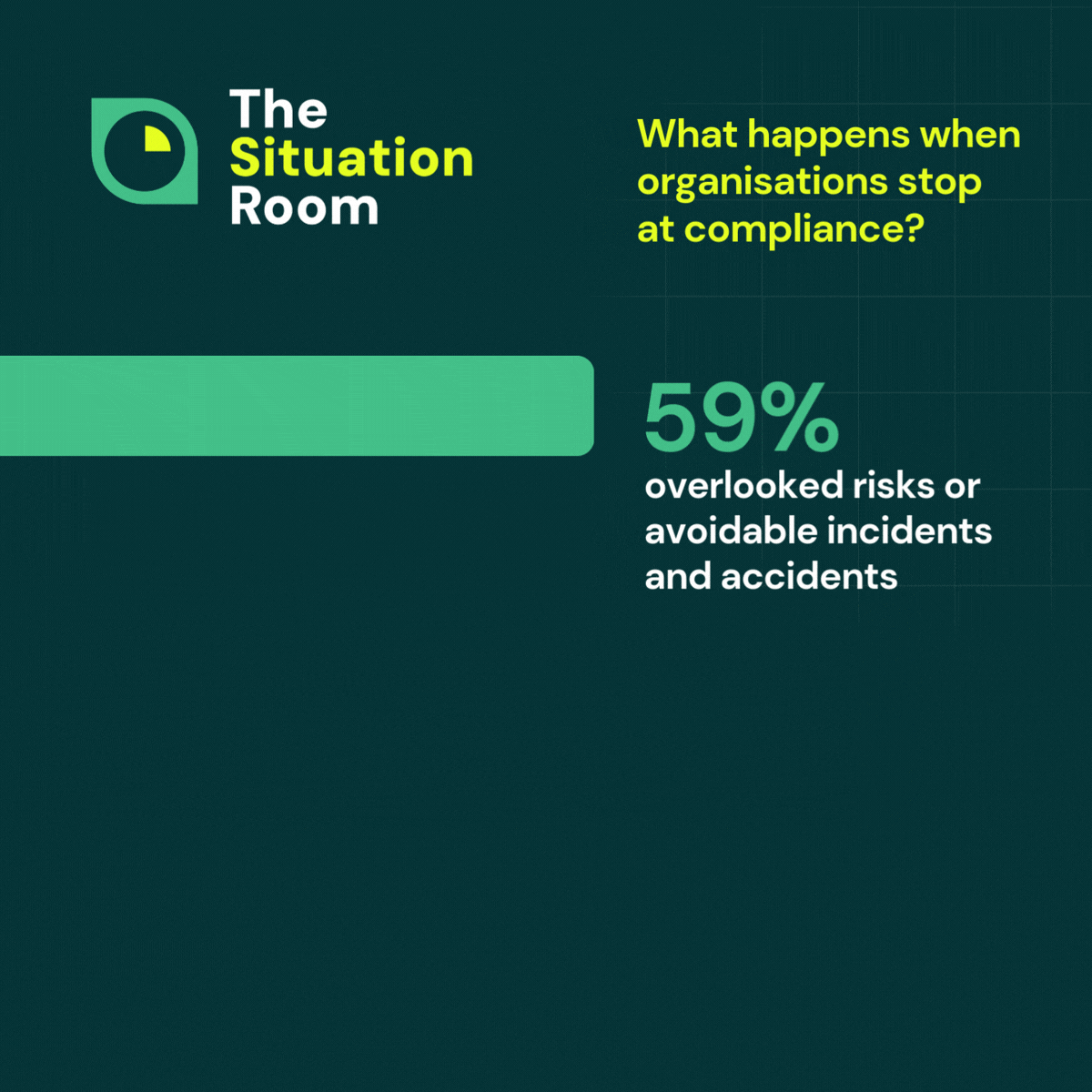
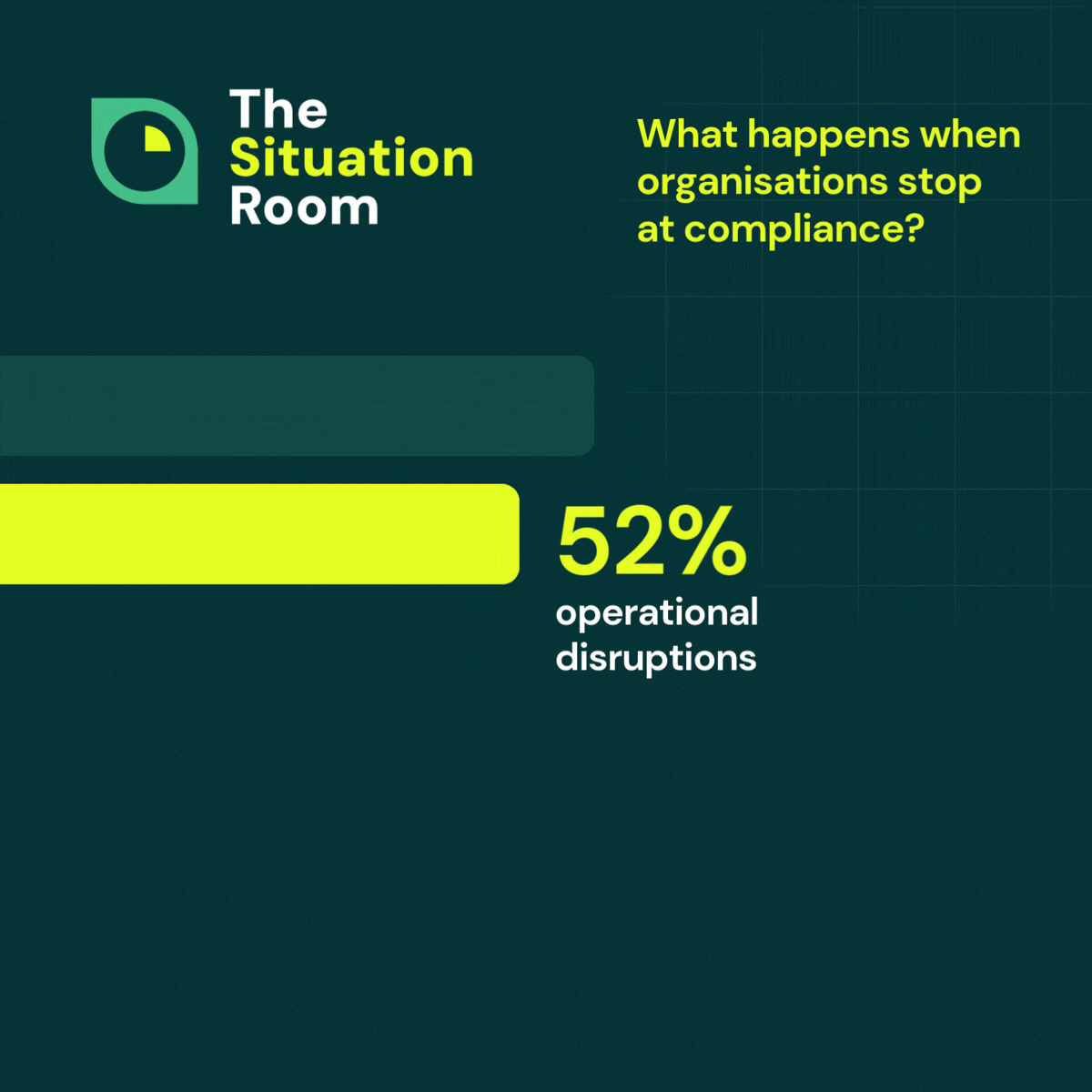
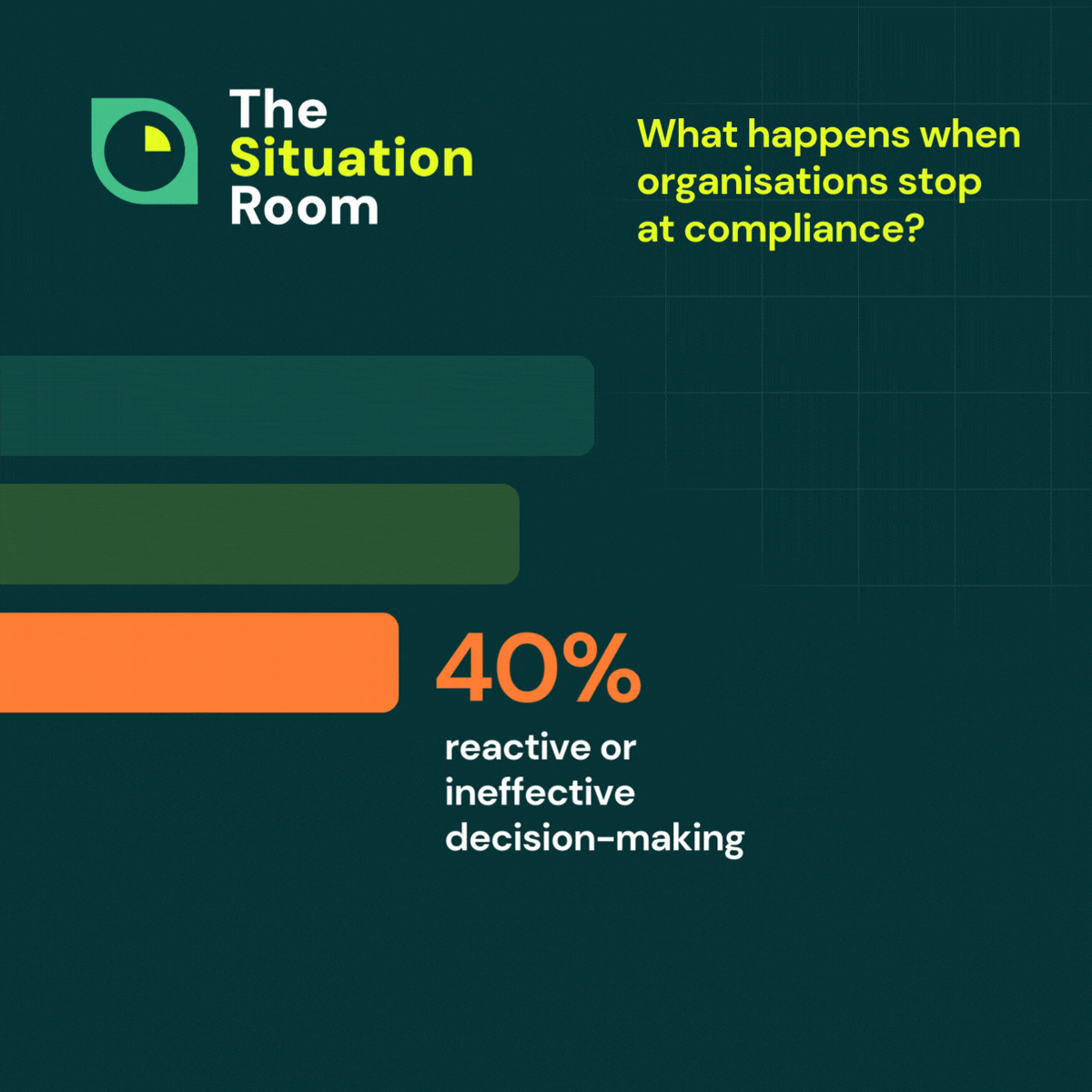
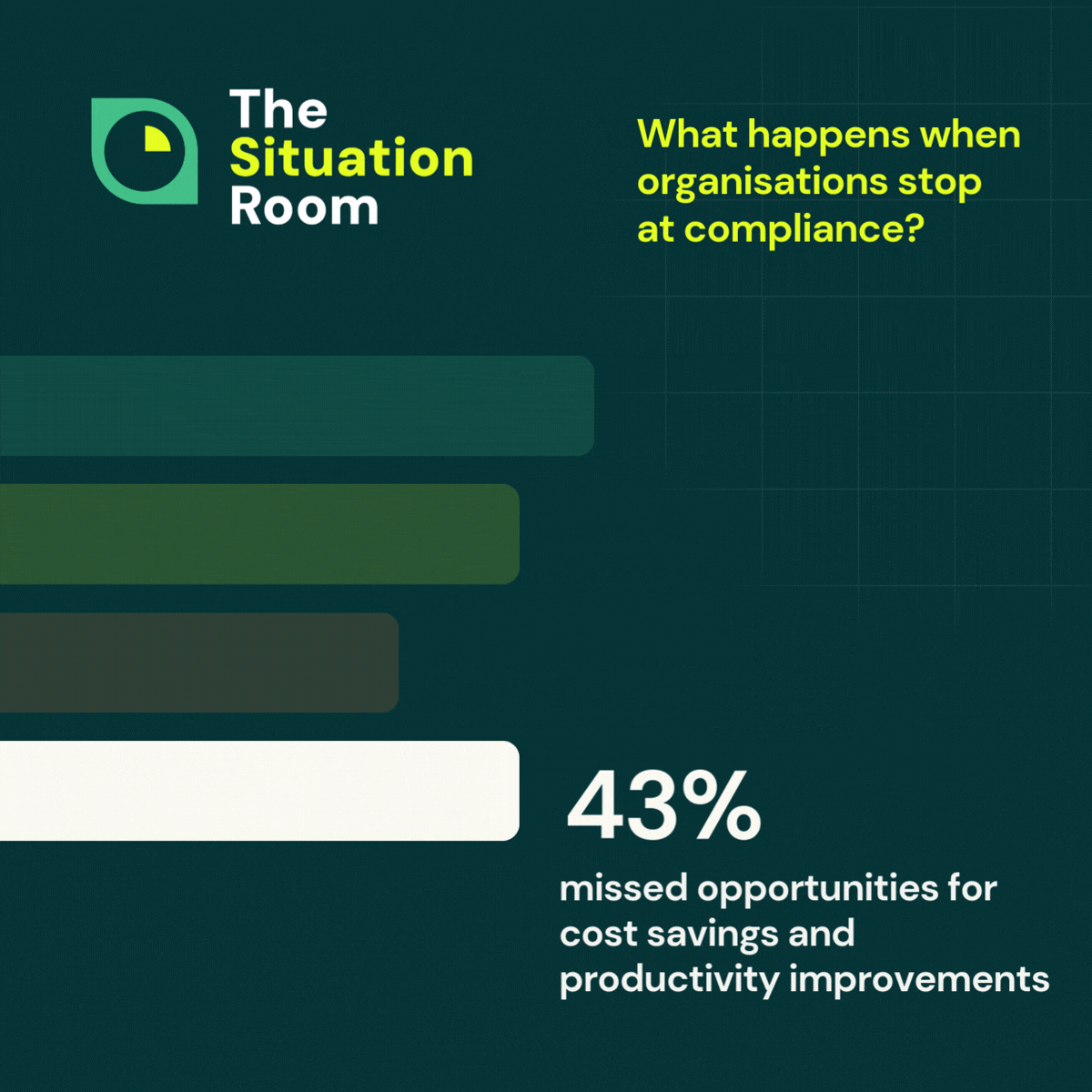
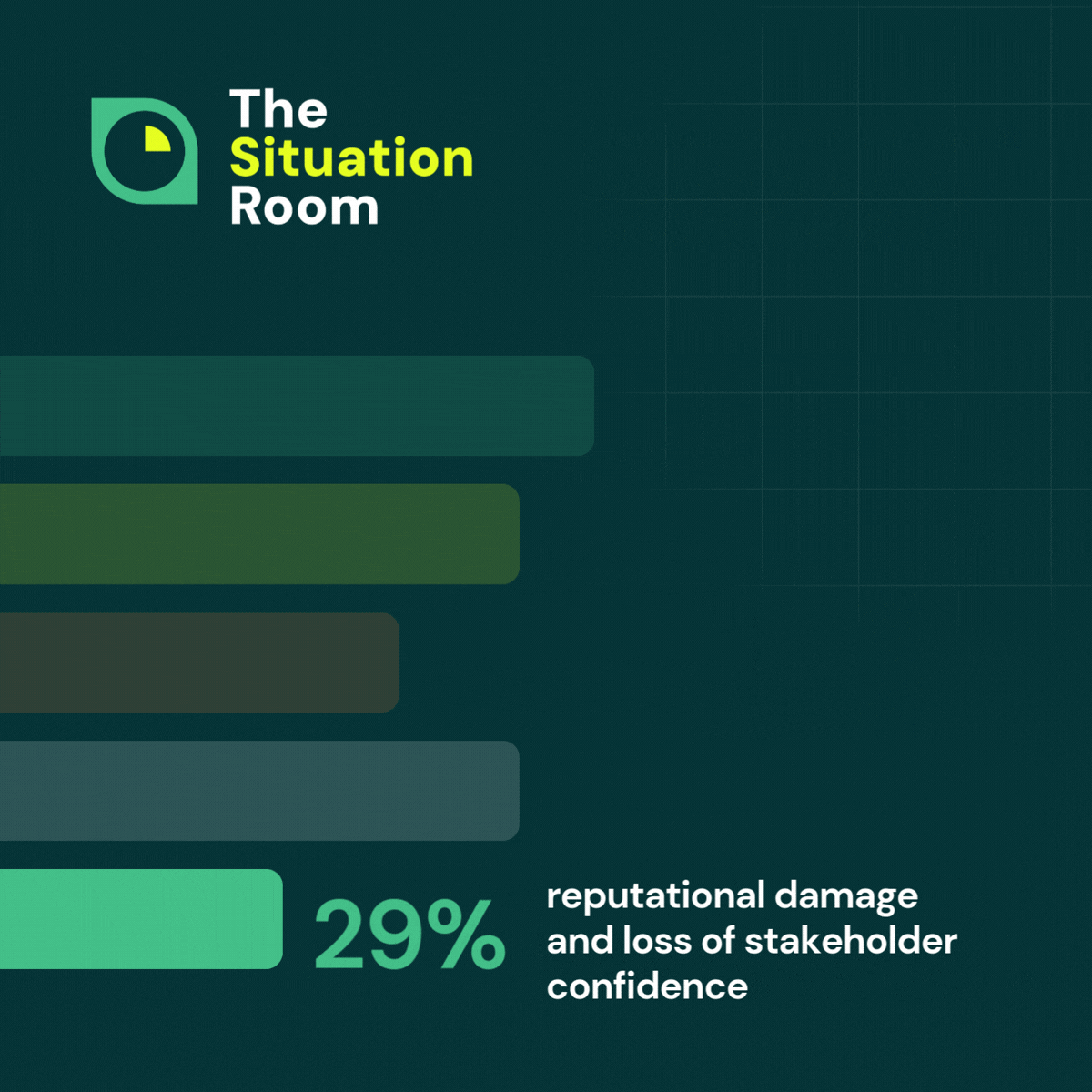
In a proprietary EcoOnline study, we asked cross-functional leaders what happens when organisations stop at compliance. Their answers reveal how real (and how costly) getting stuck at compliance can be:
- 59% cited overlooked risks or avoidable incidents and accidents
- 52% pointed to operational disruptions
- 40% reported reactive or ineffective decision-making
- 43% identified missed opportunities for cost savings and productivity improvements
- 29% highlighted reputational damage and loss of stakeholder confidence


Challenge your thinking:
Which of these consequences feels most familiar in your organisation — and which ones do you feel in control of? Join the live debate on 25 February as experts explore moving beyond the compliance floor to unlock measurable impacts on profitability and performance.
“Good enough” leaves real money on the table
The overarching challenge with safety and sustainability investment is that success is invisible. It’s difficult to put a precise financial value on incidents that never happened, disruptions that were avoided or crises that never escalated. So, when budgets are tight and ROI is under scrutiny, that uncertainty often makes it harder to justify investing beyond compliance.
EcoOnline’s survey asked leaders to estimate something concrete: the potential profitability impact of better visibility and more proactive intelligence across safety and sustainability. The responses were striking.
- 97% agreed that better insights would drive a profitability boost of at least 3%.
- 70% of respondents said that improved safety and sustainability insights would drive a boost in profitability of at least 5-6% and more.
- One fifth believed the impact would be in the range of 7-10%.
In other words, safety and sustainability have the potential to deliver far more than basic compliance. When managed beyond that minimum obligation, they can drive bottom-line growth.
Challenge your thinking:
If any other operational initiative drove a 5% improvement in profitability, it would get immediate executive attention — so why isn’t safety and sustainability on the growth agenda?
Why most organisations stay at “good enough”
If leaders recognise the limitations of compliance — and the value beyond it — why do so many organisations still treat compliance as the end goal? There are several key friction points:
- Not seeing the business value in the data: Many organisations simply don’t think about their safety and sustainability as a source of business insights. They see it as the means to achieve a binary outcome — compliant or not compliant — rather than data that they can learn from and act on to create competitive advantage.
- Not translating into financial outcomes: There’s also a language barrier: EHS/ESG teams need to translate their data and insights into the CFO’s language to convincingly explain how safety and sustainability benefits can drive measurable business value (and thus justify further investment).
- Lacking bandwidth: It’s worth reiterating that achieving compliance remains a heavy lift in itself — especially given the typical reliance on manual data aggregation and reporting. It’s hard for some to imagine doing more — moving from reactive to strategic — when you’re already stretched thin trying to achieve and maintain baseline compliance.
- Lacking data visibility: Our survey highlighted common blind spots that limit visibility. Safety and sustainability datapoints are fragmented across systems. Incident data lives in one place, training records in another, permits and audits in spreadsheets, contractor information with third parties, and sustainability metrics in separate reporting tools. Organisations have the tools and processes to pull together the data they need to achieve compliance. But these silos and blind spots make it challenging to do the more advanced correlational analysis to pull out deeper insights and drive more proactive strategies.
Challenge your thinking:
Where do safety and sustainability data still sit in silos in your organisation — and what decisions are you making without the full picture? Register for the live debate on 25 February.
What “better” looks like: From visibility to proactive control
Our recent survey of EHS and ESG leaders clearly established the limitations of solely targeting safety and sustainability compliance — and the potential business value to be gained through going further. But we need to move beyond the theoretical if we’re going to build a business case for elevating safety and sustainability targets. In other words: If visibility is the goal, what will businesses specifically be able to see — and how will they act on that insight?
The survey asked forward-thinking leaders this exact question, and their responses demonstrated wide-ranging potential hiding in these safety and sustainability insights:
Correlational insights:
- Linking incidents with training completion, permit breaches and contractor status
- Correlating safety events with chemical exposure, near misses and engineering controls
- Mapping injury trends against weather patterns, air quality or seasonal conditions
- Using wearable data to compare fatigue or vital signs with historical risk patterns
- Benchmarking top loss drivers — incidents, spills, downtime — across sites and suppliers
Actionable outcomes:
- Dynamic auditing that focuses effort where risk is highest
- Smarter contractor selection, performance management and improvement planning
- Targeted training interventions for higher-risk sites, roles or suppliers
- Better-prepared crisis response through realistic drills and feedback loops
- Timely “nudges” and micro-interventions in foreseeable risk scenarios
Challenge your thinking:
If you could connect just two safety or sustainability data sources tomorrow, which insight would you want first — and what decision would it change?
To sum up, leading organisations are beginning to realise that there is value in moving beyond compliance – as their data models have matured – using that mass of data to analyse trends and uncover powerful insights. Those insights have given them better visibility into operations, performance and opportunities.
EcoOnline’s survey revealed unanimous agreement from senior global leaders that there is value in integrating and connecting data across EHS, ESG and Chemical Safety. A majority (71%) saw it as a core business driver, a commercial competitive advantage, and more than half were already investing funds to do that invest in it. If your organisation isn’t exploring this untapped potential, could you be missing out on a key business driver?
Join the live debate — From Compliance to Competitive Edge: Can Safety and Sustainability Drive Growth?
Compliance is essential. It’s the baseline. But staying there leaves real value on the table — and leading organisations know it. They’re moving beyond the compliance floor to unlock competitive advantage: better visibility, proactive decision-making, and measurable impact on profitability and performance.
Join leaders from Tesco, Biffa, SMRC and EcoOnline as we explore where compliance ends, strategic value begins, and how organisations can build on that foundation to make safety and sustainability work harder — for people, performance, and the bottom line.
25 February 2026 | 10:00am EST, 3:00pm GMT
More on this situation
From compliance to competitive edge: Why leaders may be rethinking sustainability reporting – Deloitte
ESG on the capital market: sustainability as a competitive advantage – KPMG
Procrastination on climate and nature is eroding corporate value – Sustainable Views
Stories we’re following
‘Competitive edge’: Laurence Odfjell sees sustainability as good business with fast payback – Tradewinds News
Four ways ESG leadership offers a competitive edge in the manufacturing sector – Consultancy.eu