

g2 review graphic showing 4.3 out of 5 stars

ESG and sustainability management that goes beyond reporting

quote marks

“EcoOnline has been a complete game-changer and it’s given our team confidence that we’ll meet and exceed our reporting requirements.”

esg software icon with gradient backround

Go beyond regulatory compliance with ESG and sustainability management software that creates  lasting business value.

NHS
Saint
tesco
mitie
merck
engie
infobip color logo
orange quote marks

In uncertain times, when conditions change – be ready to meet them.

Combine climate risk with our lone worker and emergency response solutions to maintain control in a rapidly shifting situation.

Together, these solutions help teams prepare with confidence, coordinate incidents in real time and recover faster from disruption.

hadley group logo
infobip color logo
national express logo
Source G2 Review
EcoOnline
★ ★ ★ ★ ★ 4.3
Evotix
★ ★ ★ ★ ★ 3.9
Ease of Admin
85%
75%
Ease of Setup
85%
72%
Ease of Use
90%
78%
Likelihood to Recommend
87%
83%
Quality of Support
80%
74%
What is ESG software?

ESG software helps organisations collect, manage, analyse, and report environmental, social, and governance data in a structured and auditable way. It enables businesses to measure performance, monitor progress against sustainability goals, support regulatory reporting requirements, and provide stakeholders with transparent ESG information.

Why is ESG reporting important?

ESG reporting helps organisations demonstrate their commitment to sustainable and responsible business practices. It supports compliance with evolving regulations, strengthens investor confidence, improves stakeholder trust, and provides valuable insights that can drive operational improvements and risk reduction.

What are the benefits of ESG management software?

ESG management software helps organisations:

– Centralise ESG data in one platform
– Improve data accuracy and auditability
– Reduce manual reporting processes
– Track sustainability targets and progress
– Support compliance with reporting frameworks and regulations
– Enhance decision-making with real-time insights
– Build trust with investors, customers, and employees

How can ESG software help with carbon accounting?

ESG software simplifies carbon accounting by providing tools to collect emissions data, calculate greenhouse gas emissions, and monitor performance over time. It helps organisations understand their carbon footprint across Scope 1, Scope 2, and Scope 3 emissions, enabling them to identify reduction opportunities and demonstrate progress towards net-zero goals.

What is carbon accounting?

Carbon accounting is the process of measuring and reporting greenhouse gas emissions generated by an organisation’s operations and value chain. It provides the foundation for sustainability strategies by helping organisations understand their environmental impact and make informed decisions about emissions reduction initiatives.

Which ESG reporting frameworks can ESG software support?

Modern ESG software can support organisations in preparing disclosures aligned with recognised frameworks and standards, including:

– CSRD
– ESRS
– GRI
– TCFD
– ISSB
– CDP
– SASB
– The specific frameworks supported will depend on the solution and organisational requirements.

How does ESG software improve data quality?

ESG software replaces fragmented spreadsheets and manual processes with structured data collection workflows, validation rules, automated calculations, and audit trails. This helps improve data accuracy, increase confidence in reported figures, and reduce the risk of reporting errors.

Who uses ESG software?

ESG software is used by a wide range of stakeholders, including:

– Sustainability and ESG teams
– Environmental managers
– Finance teams
– Compliance officers
– Risk managers
– Operations leaders
– Executive leadership teams

These groups work together to collect data, monitor performance, and meet reporting obligations.

Can ESG software support regulatory compliance?

Yes. ESG software helps organisations prepare for and respond to evolving sustainability regulations by centralising data, maintaining evidence and audit trails, and supporting reporting requirements. This makes it easier to demonstrate compliance and respond to stakeholder requests.

How can organisations get started with ESG management?

The first step is establishing a clear understanding of ESG priorities, reporting obligations, and available data sources. ESG software can then provide a structured approach to data collection, carbon accounting, target setting, and reporting, helping organisations build a scalable and repeatable ESG programme.

Why choose a dedicated ESG platform instead of spreadsheets?

While spreadsheets may work for small-scale reporting, they often become difficult to manage as ESG requirements grow. A dedicated ESG platform provides greater transparency, automation, governance, and scalability, helping organisations improve efficiency while reducing reporting risk and administrative burden.

How does ESG software support sustainability goals?

ESG software enables organisations to set measurable targets, track progress, identify trends, and monitor key performance indicators. By providing visibility into sustainability performance, organisations can make data-driven decisions and accelerate progress towards their environmental and social objectives.

What should organisations look for in ESG software?

– Carbon accounting capabilities
– Data collection and automation features
– Reporting framework support
– Auditability and governance controls
– Ease of implementation and use
– Integration capabilities
– Scalability for future requirements
– Expertise and support from the vendor
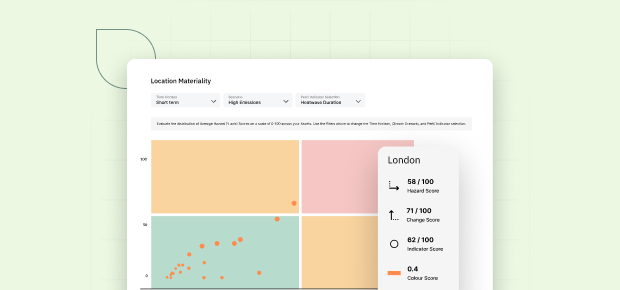
– Climate risk modelling capability 
– ESG program impact forecasting tools

These capabilities help ensure the platform can support both current reporting needs and future ESG ambitions.