

Health & Safety

How to make better crisis management decisions

This blog will look at how improving our understanding of the way we think can lead to better crisis management decisions. It also looks at the practical steps you can take before, during and after a crisis to improve outcomes.
Image of a dip in a chart
Back to all
Article

By Laura Fitzgerald

May 27, 2026

Summary:

  • Effective crisis management follows three phases: pre-crisis preparation, active response, and post-crisis review.
  • Under pressure, humans default to fast, instinctive thinking โ€“ making โ€œgood enoughโ€ decisions rather than optimal ones. This is normal, not a failure.
  • The most common errors โ€“ confirmation bias, groupthink, and underestimating how fast a crisis escalates โ€“ are predictable and can be countered with the right processes.
  • Planning and rehearsal are your most powerful tools: they allow careful thinking to happen before the pressure is on.

When a crisis strikes, it is the management decisions made in the first minutes and hours that determine whether a difficult situation will become a disaster.

Deepwater Horizon, the Columbia space shuttle, Grenfell tower โ€“ in each case the decisions that lead to disaster were made by intelligent, highly experienced people.

So ask yourself, why do smart people make poor choices under pressure and what can organisations do about it? How can we ensure that our approach to crisis management doesnโ€™t make a bad situation worse?

Table of contents

Click on a specific section below to navigate to that area:


What is crisis management?

Crisis management describes how challenging and important decisions are made, and how actions are taken to reduce harm in a period of intense difficulty or danger. The danger might be to the reputation of an organisation, a financial risk, or a risk to life.

Decision makers are under the most pressure when the wrong decision can lead to deaths and injuries.

One type of crisis usually follows another. For example, a production problem is a business risk but can also lead to an explosion or fire โ€“ putting staff at direct risk of harm. This leads to environmental issues as toxic fumes are expelled or contaminated material enters a water supply. Now, residents and businesses are affected, regulatory bodies are involved, and client needs are not met.

Warning signs sometimes precede a crisis. A pandemic like Covid-19 had been predicted for decades and the crisis developed slowly. However, other crisis timescales are much shorter. 30 minutes was the amount of time it took for the fire to spread from a 4th floor apartment to roof level (above the 24th floor) at Grenfell tower.

Crisis management typically has three stages: pre-crisis preparation, active crisis response, and post-crisis review.


Why โ€˜good enoughโ€™ is often the best you can do in a crisis

How do you normally make decisions? For a major purchase (like a house or car) you would take the time to list the criteria, score your options against them, and then arrive at your choice.

You probably wonโ€™t put that level of effort into everyday decisions like your weekly grocery shopping. Instead, youโ€™ll take short cuts โ€“ using one or two criteria. That could be price, past experience or time pressure.

This ability to switch between careful, methodical consideration and faster, more instinctive thinking is part of human evolutionary inheritance. Our distant ancestors needed to both plan and decide carefully when foraging for food or tracking animals and react quickly to the presence of predators. Do we run, fight, or hide?

A crisis causes us to fall back on these shortcuts. When we donโ€™t have the luxury of time to consider all options and criteria, we prioritise. When something seems โ€˜good enoughโ€™, itโ€™s selected. It might not be the best option โ€“ if you had the time to consider all the options, against all the criteria, a better one might have been available. Itโ€™s the best option in the heat of the moment.

CASE STUDY

When โ€˜good enoughโ€™ saves lives โ€“ US Airways Flight 1549

When both engines failed on US Airways Flight 1549 on 15 January 2009, Captain Chesley B. Sullenberger (Sully) and his crew had less than four minutes to make a decision and land the plane somewhere.

The three-page checklist normally completed before a landing would take 30 minutes. โ€˜We forced calm on ourselvesโ€™ Sullenberger explained. He prioritised the criteria that seemed the most important โ€“ to save every life on the plane and of the people below. He knew which technical steps in the checklist would have the best impact on that outcome.

Captain Sullenberger landed on the Hudson River with no loss of life, but the plane was damaged.  At a hearing after the event, Sullenberger was told that calculations had shown he might have made it to a runway and might have saved the plane. But to demonstrate that had taken hours of simulations on the optimal approach โ€“ time that the crew of Flight 1549 didnโ€™t have.


Before the crisis: why planning is your most powerful tool

Quote Icon

In the moment, it can be hard to think. Having a plan is vital and having the flexibility to deliver it even more so.

โ€“ DR. ALISTAIR TEAGER,
Consultant clinical neuropsychologist,
Salford Royal Hospital

When we make decisions under pressure, we donโ€™t have time to consider all the options. Planning takes advantage of our ability to think carefully about multiple priorities before the pressure is on.

If we could predict every crisis, we could plan our response and weigh up the alternatives, applying our methodical optimising slow-brain thinking to the problem, rather than our โ€˜good-enoughโ€™ fast-brain.

While we canโ€™t plan for everything that will ever happen, we can plan for a broad range of scenarios. When a crisis happens, we have some tools ready to use.

Most organisations plan for fire evacuation. Many stop there. But a far wider range of scenarios can be anticipated, and planning for them โ€“ even imperfectly โ€“ dramatically improves outcomes.

Did you know?

Globally most employees believe that a cyberattack or data breach poses the greatest risk to business operations.

Managing information before a crisis hits

Effective planning depends on having the right information. In relation to the Grenfell fire, Dany Cotton, the London Fire Brigade Commissioner, justified the lack of training that firefighters had for a cladding fire: โ€œIn the same manner that I wouldnโ€™t develop a training package for a space shuttle to land on the Shard โ€ฆ I wouldnโ€™t expect us to be developing training or response to something that simply shouldnโ€™t happen.โ€

It shouldnโ€™t have happened, but it did. The Grenfell Inquiry found evidence that if the information available across the organisation had been shared appropriately, a Grenfell-like fire could have been predicted and planned for. The existence of a โ€˜siloโ€™ had prevented information from getting to the right people.

The challenge is not just having information. It is organising it so that meaningful threats can be identified. You cannot assess the likelihood of a crisis if the relevant data never reaches the right people. Good systems, combined with regular cross-functional discussion, close this gap.

You need to find a balance between spending a lot of effort on something that will never happen and ignoring things that havenโ€™t happened yet but could occur in the future.

Remember: considering the impact of unlikely โ€“ but catastrophic โ€“ incidents is a useful way to test your crisis response plans.

3 common planning shortcuts

1) We crave normalcy and familiarity

Even in the face of evidence, we donโ€™t like to think about bad things happening. We plan based on what we already know. When things stay the same, this works. When things change, it makes it difficult to see the need for change. Pilots land planes on runways, not in rivers. In high-rise buildings, firefighters put out fires in one self-contained flat, they donโ€™t evacuate people from 120 separate flats. Large scale pandemics are historical curiosities, not a present threat.

When the โ€˜normalโ€™ order of things breaks down, organisations that planned only for what they know find themselves exposed.

2) Near misses breed false confidence

In safety management, we are supposed to learn from near misses โ€“ someone nearly trips on an uneven floor, so we repair the floor to prevent someone falling. At the scale of a crisis, near misses make us think we are already resilient.

When Hurricane Ivan veered away from New Orleans in 2004, the authorities appeared to scale back their preparations, only to be devastated by Hurricane Katrina a year later. Europe had observed SARS, swine flu, and Ebola without major domestic impact. That track record may have contributed to under preparedness when COVID-19 arrived.

3) Short-term costs block long-term safety

An aversion to a loss now for something better in the future also prevents good planning.

Hyperbolic discounting โ€“ when we prefer smaller, immediate rewards over larger, delayed rewards โ€“ might be the reason we donโ€™t keep a stockpile of personal protective equipment (PPE) that might never get used. It has been used to explain why despite warnings in the 1990s, there was no tsunami warning system in place throughout the Indian Ocean. If there had been, the impact of the 2004 tsunami might have been lessened.

Are you risking crisis amnesia?

Are businesses really learning from past crises? Find out what the aviation industry has to teach us about enduring resiliency.


During the crisis: when crisis management goes wrong

Managing information in an ongoing crisis

As with planning, information is key during a crisis. People need the right information at the right time to make the right decisions. Behaviours regarded after an event as โ€˜panicโ€™ can often be explained by the lack of information at the time a decision was made.

Too little information causes panic. Too much causes overload. Keeley Foster, who managed large grass fires in outer London as Deputy Assistant Commissioner at the London Fire Brigade, described arriving at a major incident and being โ€œbombarded with informationโ€. Her response was to process it, prioritise it, and allocate it, not absorb it all at once.

The right crisis management software can make a big difference to information management and communication. Tools to specify who gets a message by role or department or location make it more likely people have the right information on which to base their choices.

Too often, when looking back at a crisis, people are accused of panicking โ€“ making decisions that were clearly irrational. What might look irrational to us with the benefit of hindsight might have been perfectly reasonable to the people making that decision at the time.

3 common crisis management shortcuts

Quote Icon

I will look at any additional evidence to confirm the opinion to which I have already come.

โ€“ LORD ARTHUR MOLSON,
British Conservative politician (1903-1991)

1) We underestimate how fast a crisis can worsen 

Humans evolved to think in straight lines. Pandemics, fires, and reputational crises grow exponentially. On the 23rd of February 2020, there were ten reported COVID-19 cases in the UK. Cases were doubling every three to four days. By the time of the first lockdown a month later, there had been over 12,000 cases.

If bad publicity about your company is shared in one social media post and seen by 10 people who repost, by the end of a single day the bad news might have been seen by thousands, or even millions.

If you assume that a crisis will grow linearly, you are likely to miss important cues that will tell you to change course, to try a different approach, or to prioritise one aspect of a crisis over another. 

2) We are overly outcome-focused 

It is painful to remember when we got something wrong. We prefer to dwell on success. In a crisis, the options that come to mind first are likely to be the ones that worked before. If sandbags held back the flood last time, the assumption is they will do the same this time. If more water eventually put out the previous fire, the same approach is tried again.

This focus on outcomes can escalate โ€“ each time we get away with a little more, we become bolder next time. Before the Colombia space shuttle disaster in 2003, NASA โ€˜got awayโ€™ with at least 14 previous incidents of damage to space shuttles. The damage threshold creeps up with each successful flight, until the flight where the shuttle disintegrates.

3) Confirmation bias is natural, but hampers progress 

Quote Icon

โ€ฆthey were not testing whether the well was safe, they were confirming that it wasโ€ฆ

โ€“ ANDREW HOPKINS,
Professor Emeritus,
Australian National University,
on Deepwater Horizon

Confirmation bias is not a character flaw; it is a feature of how the human brain is wired. Neuroscientists have identified parts of the brain that shut down when presented with contradictory information, while โ€˜happyโ€™ circuits light up when given information that confirms existing understanding.

In everyday life, this is often healthy and stops us endlessly second-guessing our choices. In a crisis, it is dangerous. Imagine you have invested much time and effort in crafting a crisis response to a situation. You have mobilised resources to follow this plan. To admit that there is evidence your plan isnโ€™t working โ€“ to abandon the plan and ask for more help, might feel like failure.

When evidence is missing to support our theory, our brains will fill in the gaps. Look at figure 1. What shapes do you see? Are these the same shapes that have been drawn, or is your brain filling the gaps?

Image 01 Shape 01
Image 01 Shape 02

Beware the danger of groupthink

Psychological research shows us that without support, information and challenge, a group is likely to take greater risks than any individual member would have taken on their own. This phenomenon was defined as โ€˜groupthinkโ€™ by the American social psychologist Irving Janis in 1972.

Characteristics of groupthink include an unswerving belief in the decisions of the group, supported by group pressure against different opinions and self-censorship of any doubts.

The pressure to conform is deeply human. In a 1950s study, Professor Solomon Asch asked people to compare the lengths of lines on paper, an objectively simple task. Around three-quarters of participants gave the wrong answer at least once, after hearing others in the room (who were in on the experiment) confidently gave the same wrong answer.

Image 02

Now apply that dynamic to a tightly knit management team under pressure, making decisions that could determine whether a crisis becomes a disaster. The question is not whether groupthink is a risk but whether you have the structures in place to counter it.


During the crisis: 3 key steps to successful crisis management

Up until this point, we have taken a surface level look at why people behave the way that they do in a crisis situation โ€“ and the errors that can result. Just understanding why is not enough to stop us from making wrong decisions.

We need to have plans and processes in place to catch errors before they become disasters. We also need the flexibility to know when a plan isnโ€™t working and needs to be changed. Here are 3 examples:

1) Plan, practice, plan, practice

Quote Icon

There wasnโ€™t time in that critical moment to try to devise my strategyโ€ฆ I decided that we were only going to do the highest priority items and do them very, very well.

โ€“ CAPTAIN CHESLEY SULLENBERGER (โ€˜SULLYโ€™),
Pilot of US Airways Flight 1549,
in an interview in 2018

Planning before a crisis allows us to weigh up the options with our slow-thinking brain. Practising that plan makes it more likely that in a crisis our fast-thinking brain will take the right shortcuts.

You cannot plan the exact details of every crisis you might face. But your crisis management plan can account for a broad range of scenarios and build up a set of skills that can be applied when something new comes along.

The most usual form of rehearsal is the fire evacuation drill, where an alarm sounds and staff march out to the assembly area to be checked. But practice doesnโ€™t have to be a full-scale operation. Table-top exercises involving key decision makers are a cost-effective way of testing the communications, technology and procedure of your crisis management plan.

2) Make use of status checkpoints

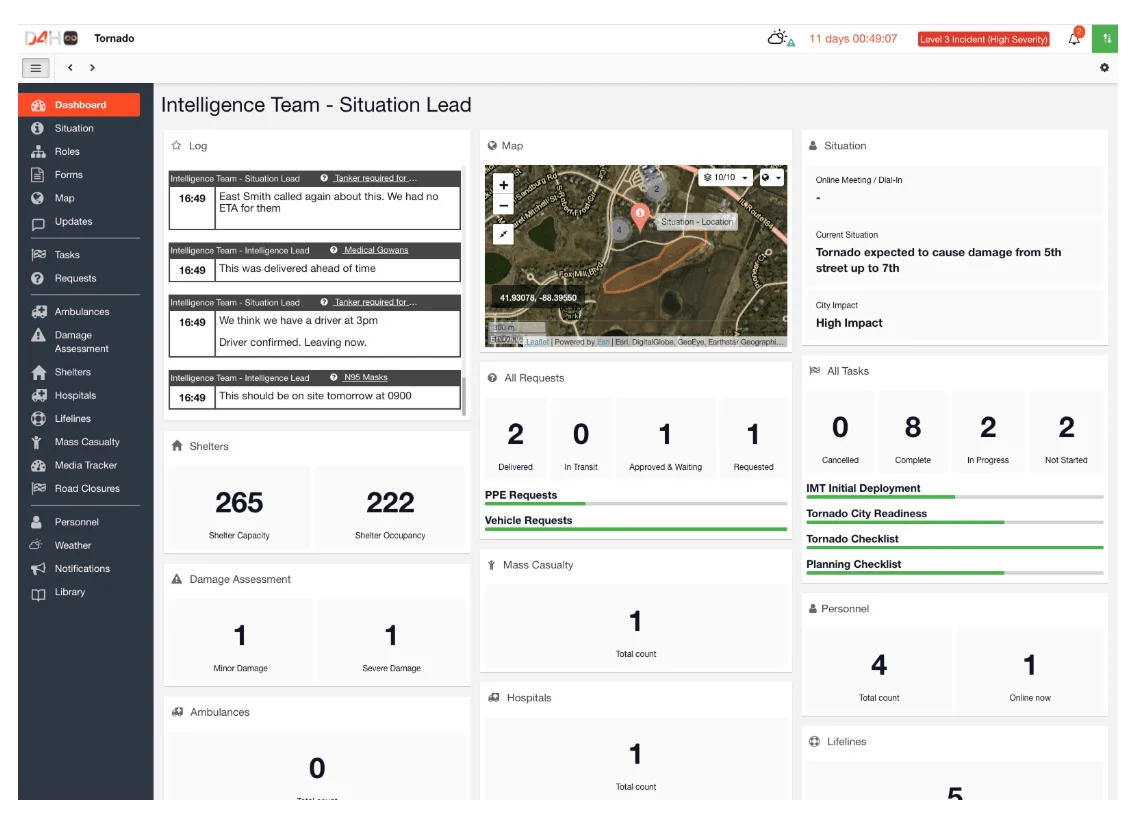
Since our perception of time when under pressure can be inaccurate, it is unsafe to rely on someone noticing that a crisis is growing more quickly than anticipated, or that the plan isnโ€™t working as expected. We need a system to bring together and summarise all the key clues that decision makers should be looking at, and a regular โ€˜alarm clockโ€™ that reminds us to take time to stop and reconsider the plan we are following.

Status meetings can be in person or virtual, depending on the type of crisis being handled. They might be timetabled to take two minutes every 20 minutes during a fire, or half a day every week during a pandemic.

However long or frequent, status meetings need some structure to avoid falling into confirmation bias and groupthink. You need a process that requires decision makers to respond to particular prompts โ€“ for example, about communication with stakeholders, the status of equipment, or the growth of the crisis. Set criteria for signals that must not be ignored.

Image 03

Situation dashboard by D4H

3) Pay attention to team dynamics

Quote Icon

Many of their team meetings were not conducive to open and productive communication. Often, disagreements were โ€˜unsafeโ€™ in that someone would win and someone would lose, even if everyone was raising valid points.

โ€“ DR. THOMAS KRAUSE,
Organisational Safety author,
on NASA before the Columbia disaster

A successful team will collectively have all the knowledge needed to manage a situation. This can include regular members of the operational team, or specialists brought in for their expertise. But assembling a team is not simply a matter of having one person to cover each skill area.

Team members need to co-operate around a common goal, while communicating with each other honestly.

To avoid groupthink, consider bringing in a new person to take a fresh look at the evidence. If they are not invested in the original plan, they will be more likely to suggest a new approach if one is needed. One approach is to employ someone as a โ€˜devilโ€™s advocateโ€™ โ€“ a person whose specific job it is to disrupt and to point out the flaws in someone elseโ€™s line of thinking.

Technological solutions, where people can respond from separate locations, rather than having to come together to a single location, might have the added benefit of reducing group pressures to conform.


After the crisis: the importance of continual learning

Applying some of the approaches described in this blog, supported by tools and resources, will improve your ability to manage the crisis to a successful conclusion. It will also help you provide business continuity and a return to normal operations. Whatever happens during a drill or a real emergency, there will be something to learn.

Grenfell Tower echoed a cladding fire at Knowsley Heights near Liverpool in 1991, in which no one died. Columbia echoed Challenger, which killed seven astronauts in 1986.

Failing to learn lessons makes it more painful when mistakes are repeated.

Many of the shortcuts we take in planning or managing a crisis also apply when looking at what happened during an event. The โ€˜good enoughโ€™ option that was pragmatic in the heat of an emergency appears to be a poor choice with the benefit of hindsight.

It is often easiest to blame the people on the front line. We judge people more harshly if a decision didnโ€™t work out than if it did, even if the reasons for success or failure were outside their control.

An accurate account of information received, decisions made, and actions taken can make the review process more objective. Paper records can be unreliable, so where possible use a system that allows you to create a time-stamped log, including information from equipment, people, systems and multiple locations.

Knowing what information was available at the time each decision was made will provide better improvements to future planning than hindsight ever can.

Ready to explore such a system? Find out more about crisis management software by D4H in this quick video:

Calendar Icon

Frequently asked questions

What is the definition of crisis management?

Crisis management describes how challenging and important decisions are made, and how actions are taken to reduce harm in a period of intense difficulty or danger. The danger might be to the reputation of an organisation, a financial risk, or a risk to life.

What is a crisis management plan?

A crisis management plan is a thoroughly documented framework that sets out how an organisation will respond to a range of emergency scenarios. It typically defines roles and responsibilities, communication protocols, decision-making authority, and escalation procedures.
 
You can find a crisis management plan checklist in our health and safety compliance toolkit.

What is confirmation bias and why does it matter in a crisis?

Confirmation bias is the tendency to favour information that supports an existing belief while discounting evidence that contradicts it. This is dangerous in a crisis as teams invest effort in a plan, then unconsciously filter out signals that the plan isnโ€™t working.

What are the stages of crisis management?

Crisis management has three stages: pre-crisis preparation, active crisis response, and post-crisis review.

In the preparation stage, organisations identify likely scenarios, build response plans, and practise them.

During the response stage, structured decision-making, clear communication, and regular status checks keep the situation from escalating.

The review stage captures what happened, what decisions were made, and what should change before the next crisis occurs.

How often should I review and update a crisis communication plan?

It is vital that your crisis communication plan remains current. At an absolute minimum, your plan should be reviewed every 12 months. These reviews should be scheduled. Contact lists may need to be updated more frequently. It is also best practice to review and update your plans after a crisis event has occurred.

What is crisis communication in management?

Crisis communication refers to how information is shared during a critical event. The objective of crisis communication is ensuring the right people receive accurate, timely updates while preventing critical messages from being lost in noise.
 
While often used interchangeably, crisis communication and crisis management are not the same thing. Crisis communication is a core component of effective crisis management, covering internal communications with staff and teams as well as external communications with the public, media, and regulators.

What is the best crisis management software?

D4H is a leading crisis management software, highly rated by trusted outlets such as Capterra, Gartner and G2. D4H provides a collaborative platform to manage incidents from start to finish, with tools to assign tasks, track progress, and share critical information in one secure location.

Further reading on how we think

Asch S (1952) Effects of group pressure upon modification and distortion of judgement. In Guetzkow H (1952) Groups, Leadership and Men. Carnegie Press.
Janis I (1972) Victims of Groupthink. Houghton Mifflin.
Reason J (2013) A Life in Error. Routledge.
Kunreuther H and Meyer R (2017) The Ostrich Paradox. Wharton School Press
Collins R, and Leathley B (1995) Psychological predisposition to error in failure analysis. In Safety and Reliability. Vol 14(3).

About the author

Laura Fitzgerald

Content Marketing Manager

Laura Fitzgerald is a Content Marketing Manager with EcoOnline. She has been writing about health and safety topics since 2017, with a focus on the areas of improving employee safety engagement and EHS legislation.