

The Situation Room

Is health and safety modern enough for a modern world?

Man sitting on steps

Today’s world of work increasingly happens on smartphones that fit in our pockets. Yet, the health and safety (H&S) systems governing that work haven’t changed much since computers took up entire buildings.

What do you think:


Are current H&S frameworks, training, engagement and technology still on point — or do we need a complete overhaul? And if we need to revamp our approach to H&S, how do we balance that without unnecessarily burdening innovation and progress?

Share your thoughts in our discussion forum.


Now, here are a few key considerations to lead that discussion:

Is corporate H&S stuck in the past?

As L.P. Hartley wrote, “The past is a foreign country; they do things differently there.” And when it comes to workplace safety, many of today’s systems are still grounded in thinking from the 1970s — despite how much has changed.

Indeed, modern workplaces present a very different set of H&S risks and considerations than when most major frameworks and legislation were first introduced:

  • A more diverse workforce: Greater age and gender diversity calls for safety programmes that address accessibility needs and gender-specific equipment.
  • The rise of temporary labour: The “gig economy” changes the nature of H&S training, while transient workforces present more language and literacy challenges.
  • Remote and hybrid work: With more employees outside traditional office settings, new risks emerge in uncontrolled and decentralized environments.
  • Proliferation of technology and devices: The increasing number of devices within work environments brings concerns around ergonomic risks and connectivity-related stress.
  • New environmental hazards: Technological advances necessitate updates to chemical hazard regulations, while climate change makes risks like heat stress more prevalent.
  • Changing corporate cultures: The evolving definition of corporate responsibility adds both opportunities and pressures for H&S teams.

Challenge your thinking:


How has your company’s H&S system or framework adapted to address the changes in the modern workplace outlined above?


Join the live debate – The Health & Safety reckoning: Are we adapting fast enough?

Today’s work happens in distributed teams, digital spaces and AI-supported environments. Is health and safety evolving fast enough to keep up with those changes?

Join experts from Amazon, EcoOnline and the Safety Knights to explore how health and safety must evolve in a tech-driven world.

Register here to join the debate

What about mental health & safety?

Our H&S systems have evolved to address our growing understanding of various physical risk factors, such as carcinogenic exposure, noise pollution, ergonomic hazards and other aspects.

But conventional H&S systems have struggled to address mental health and related concerns. We must confront this, both because we now know that our employees’ mental health is directly connected to their performance — and because the increasing digitization of the modern workplace makes mental health risks more prevalent.

Challenge your thinking:


What responsibility do companies have to monitor, evaluate and accommodate employees’ mental health needs? Should employers treat mental health support with the same structure and intention as talent development?


Man wearing hardhat holding tablet

How do “safe choices” change in a tech-driven world?

Effective H&S frameworks elevate the importance of individual choice as the most powerful aspect of health and safety outcomes. Yet, today, our choices are influenced, monitored or even automatically made by digital tools. This can disconnect employees from a sense of responsibility. It can give a false sense of security — or just lull employees into disengagement and complacency. And engagement is a critical prerequisite for informed choices.

Challenge your thinking:


How do you engage and empower individuals to make healthy and safe choices when so much of their work is mediated by digital tools? How do you balance credit and accountability for health and safety outcomes between digital tools and the humans that use them?


How will AI magnify H&S risks?

We already tackled the “Janus-face” challenge of AI’s pros and cons in the last The Situation Room article and discussion. AI will take just about every one of the concerns above and amplify both the potential severity of impacts and the complexity of solutions. Moreover, autonomous systems’ very purpose is to reduce the role of humans in decision-making — to replace human choice.

Challenge your thinking:


How do we maintain human engagement and empowerment as AI takes on more autonomous decisions — and how will generational differences shape trust and oversight of AI systems?


Safety by code or by culture?

A culture of health and safety really does need to start at the top — but it demands more than an aspirational corporate statement. It’s more about the strategic and operational decisions that leaders make. How do they weigh health and safety with other business factors?

Here again, the modern world of work has often created separation between the decisions business leaders make and the health and safety impacts on people in other parts of the business. The entire digital or knowledge economy involves less overtly physical risk, but more abstract health and safety risk — often borne by the customers of your customers. Decentralization of the workforce, with remote and hybrid models, means less human-to-human connection, again making those bearing the health and safety risk more abstract.

Challenge your thinking:


Is it more effective to build a business case for prioritizing health and safety — or to lead with principles and build a culture of safety? How do you put a value on health and safety impacts on human lives?

Join the discussion — Share your thoughts now


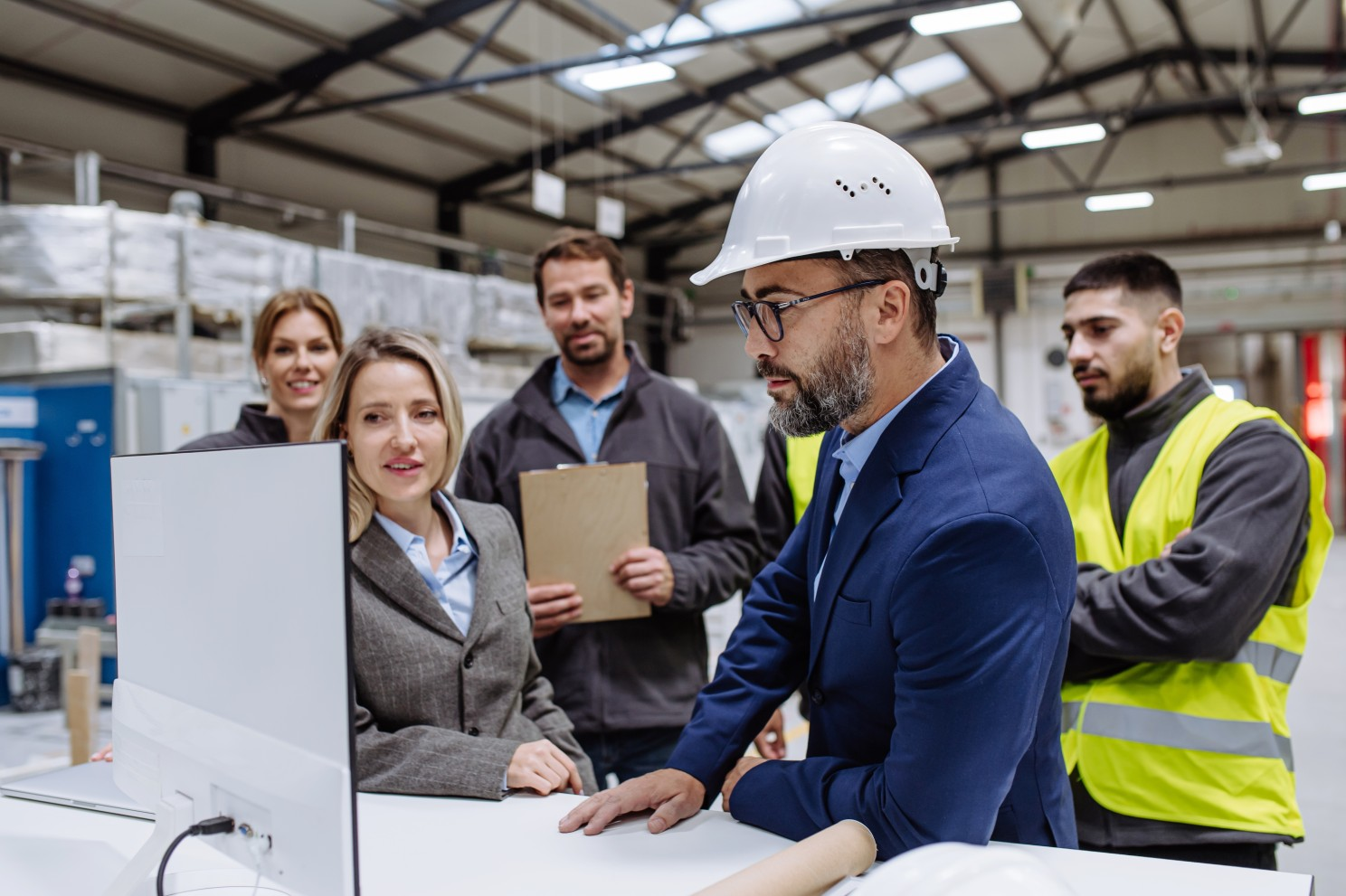
Warehouse workers meeting

Learning from legislation: Should H&S be a checklist or a framework?

The U.S. Occupational Safety and Health Act (1970) and the UK Health and Safety at Work Act (1974) have both served as foundational guideposts for corporate H&S. However, they take very different approaches to reinforcing — and in some cases, enforcing — those priorities. The U.S. system is a prescriptive set of H&S practices, designed for specific situations. While it’s clear and easy to follow, it can quickly become outdated and often requires constant updates to stay relevant.

On the other hand, the UK system is more of a framework, guiding H&S practices rather than prescribing them. It can be more subjective and harder to enforce, but it offers greater flexibility. This core framework has aged relatively well, adapting to the evolving needs of the modern workplace.

Moreover, we can see that these legislative frameworks have produced very different outcomes. While the UK boasts a relatively low rate of fatal workplace injuries, the U.S. rate is several times higher — and neither country has seen improvements over the last 10 years!

fatal injury rate line graph
cumulative fatalities comparison graphic

This question of approach extends to the H&S systems and frameworks that companies have put in place: Is a H&S system more effective with a prescriptive approach — a checklist that’s easier to enforce but harder to continuously adapt? Or is it better to create a more flexible H&S framework that’s more difficult to objectively enforce but more lasting in its core principles?

Challenge your thinking:


Which aspects of health and safety are overlooked in today’s legislation — and which existing regulations may no longer make sense for the modern workplace?

Share your perspective here!


Wakeup call: Complacency is our biggest health & safety risk

Of all the new and evolving H&S concerns, the greatest risk of all is complacency. Complacency fosters a false sense of security, leading to disengagement and “moral hazard,” where people are less cautious when they feel protected.

We cannot afford a “good enough” mentality in H&S — any incremental improvement isn’t just a matter of cost; it’s a matter of people’s lives. Moreover, the evolution of how the world of work operates — and the H&S risks inherent — demands a careful evaluation and revision of the systems, protocols and checks we rely on to keep our people safe. We cannot wait for legislation to catch up to the modern workplace; corporations and corporate leadership must lead the way in revising H&S practices and programs. And that will only happen if business leaders take an active role in defining what the future of corporate H&S should look like — and shaping flexible, future-ready legislation.

Join the live debate — The Health & Safety reckoning: Are we adapting fast enough?

As work increasingly shifts to digital spaces and AI-driven decisions, we must ask: Are our safety regulations and practices keeping pace?

Our expert panel, including Amazon’s International Head of Safety, Emma McDonald, and director of the Safety Knights, Branden Raczkowski, will explore how H&S needs to evolve for the modern world.

Wednesday, 23 April | 3:00 PM BST / 10:00 AM EDT | 30 minutes

Take a Tour of The Situation Room

New to The Situation Room community forum? Tune in for a tour of the discussion forum, resources and our newest segment, The Watchlist.

More on this situation

Safety and health at work – International Labour Organization

Five trends in workplace safety to watch in 2025 – The HR Director

Special Report – The Year Ahead 2025: Safe Work Initiatives – Jackson Lewis

Women’s PPE: Work in progress – Safety + Health

Census of Fatal Occupational Injuries (CFOI) – U.S. Bureau of Labor Statistics (BLS)

Work-Related Fatal Injuries – Health and Safety Executive (HSE)

Stories we’re following

The Pros and Cons: Maintaining Safety Balance in Efforts to Disrupt OSHA in 2025 – EHS Today

Arizona Representative Introduces Bill to Abolish OSHA – OH&S

House proposes budget cuts for OSHA and other safety agencies in FY 2025 – Safety & Health

OSHA finalizes PPE standard for construction – Construction Dive